

Written by
Bryan Sim, Business Development at AnjouHealth
An OHS programme developer at AnjouHealth focused on designing workplace health and safety initiatives that help organisations create safer, healthier, and more engaged environments. He works on translating ergonomic assessments and workplace risk insights into practical initiatives such as safety campaigns, wellbeing programmes, and workplace interventions that are impactful, sustainable, and aligned with operational needs.
Workplace safety training is often treated as a tick-box exercise, something to be done after an incident or just to “stay compliant”. Yet in Singapore, where workplace safety standards are high and enforcement is active, effective workplace safety training is one of the most important tools employers have to prevent incidents and meet their legal duties.
Done well, workplace safety training helps reduce injuries, minimise downtime, support compliance with local regulations, and protect both employees and the organisation. Done poorly, or not at all, it exposes companies to avoidable risks, higher costs, and operational disruption.
This guide explains what workplace safety training is, when it is required in Singapore, the main types of training available, and how employers can choose the right approach for their workforce.
What Is Workplace Safety Training?
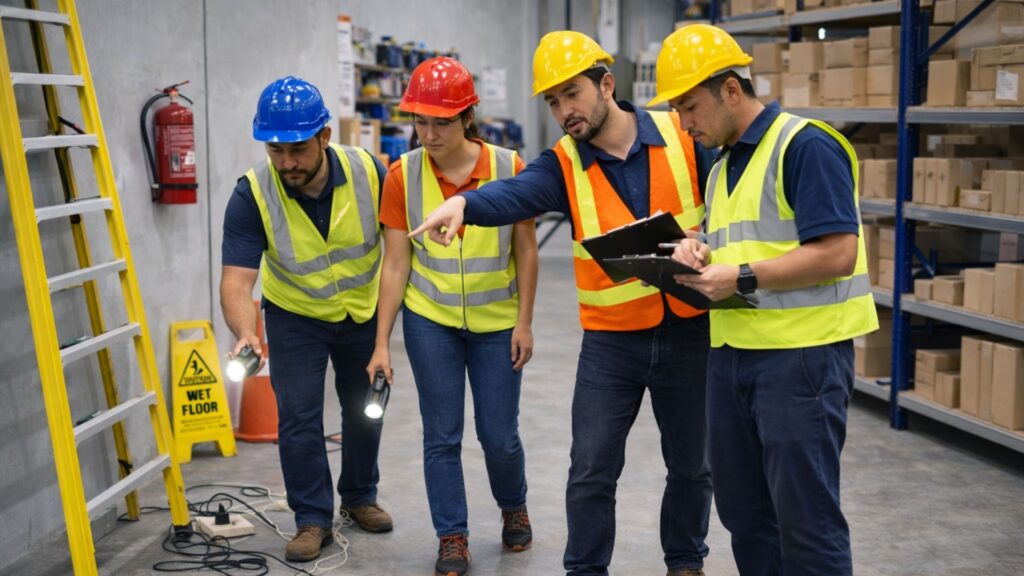
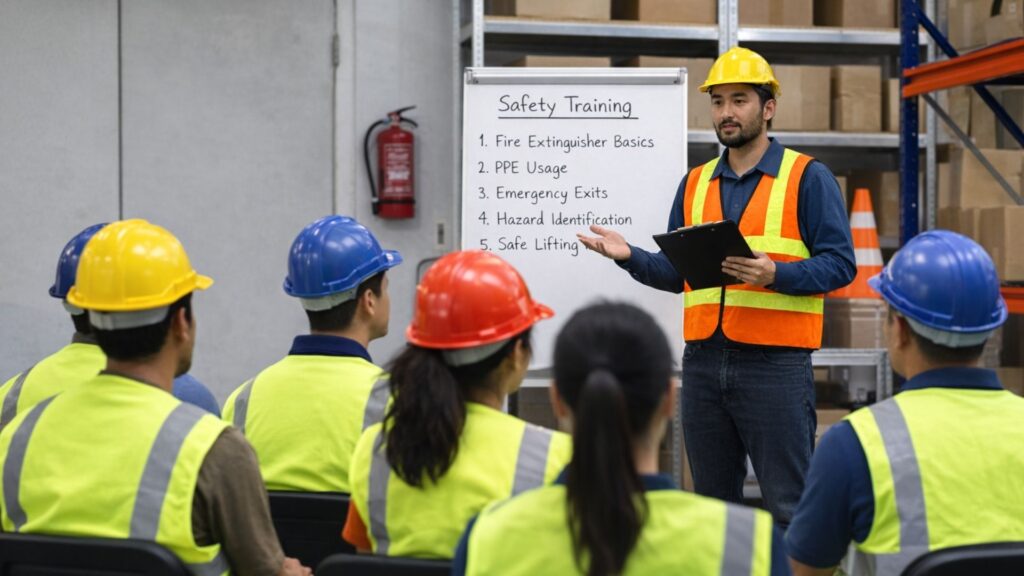
Workplace safety training refers to structured education provided to employees, supervisors, and management to help them recognise hazards, work safely, and respond appropriately to risks in their work environment.
In Singapore, workplace safety training typically covers:
- Hazard identification and awareness
- Safe work procedures and use of equipment
- Injury and incident prevention strategies
- Basic risk assessment principles
- Emergency response, reporting, and communication
Unlike one‑off “safety talks”, effective workplace safety training is role‑specific, relevant to the actual tasks and processes on site, and directly linked to the organisation’s risk assessment and control measures.
Is Workplace Safety Training Mandatory in Singapore?

This is one of the most common questions employers ask, and the answer is nuanced.
While not every role requires a specific accredited course, employers are legally responsible for ensuring workers are adequately trained to work safely. Under the Workplace Safety and Health (WSH) Act, duty holders must provide employees with “adequate instruction, information, training and supervision” so they can perform work without unnecessary risk.
In practice, training is expected when:
- New employees are onboarded into the workplace
- Job roles, processes, or equipment change
- New technology or systems are introduced
- Significant incidents or near‑misses occur
- Risk assessments identify new or elevated risks
During investigations, lack of appropriate training is frequently cited as a contributing factor, and can be considered a breach of WSH duties even if there is no explicit “course requirement” for that role.
Types of Workplace Safety Training in Singapore
Different workplaces face different risks, so workplace safety training in Singapore usually falls into several key categories linked to risk assessments and industry needs.
| Training Type | Who It’s For | What It Covers |
| Ergonomics & WMSD Prevention | Office, retail, healthcare, logistics | Workstation ergonomics, posture, manual handling, WRMSD prevention, Total WSH initiatives |
| Manual Handling / Material Handling | Warehouse, logistics, manufacturing, healthcare | Safe lifting, pushing, pulling, and carrying; team lifts; use of trolleys and aids |
| WSH Risk Management / Risk Assessment | Supervisors, line managers, WSH reps | Hazard identification, risk evaluation, control selection, complying with WSH (Risk Management) Regulations, and RMCP Version 2.0 |
| Industry‑Specific Safety Training | Construction, marine, process, and specialist sectors | Task‑specific hazards and controls, e.g., work at height, hot work, confined space, lock‑out/tag‑out |
| Return‑to‑Work (RTW) & Injury Management Awareness | HR, supervisors, RTW coordinators | Supporting injured workers, modified duties, communication with healthcare providers, and national RTW programmes |
The most effective programmes combine general safety principles (e.g. risk management, incident reporting) with site‑specific risks identified through formal risk assessments and WSH reviews.
On‑Site vs Online Workplace Safety Training
Many employers consider online training for convenience and cost savings. Both on‑site and online formats have strengths and limitations:
| On‑Site Training | Online / E‑Learning |
| Tailored to actual work environment and equipment | Standardised content, easier to roll out across locations |
| Enables practical demonstrations and hands‑on practice | Mostly theoretical, with limited real‑world simulation |
| Higher engagement and interaction with trainers | Flexible timing, self‑paced learning |
| Ideal for high‑risk tasks (manual handling, machinery, field work) | Suitable for basic awareness, policy refreshers |
For roles involving physical tasks, equipment use, manual handling, or ergonomic risks, on‑site or blended training (online theory + on‑site practice) is usually more effective and better aligned with WSH expectations.
Who Should Attend Workplace Safety Training?
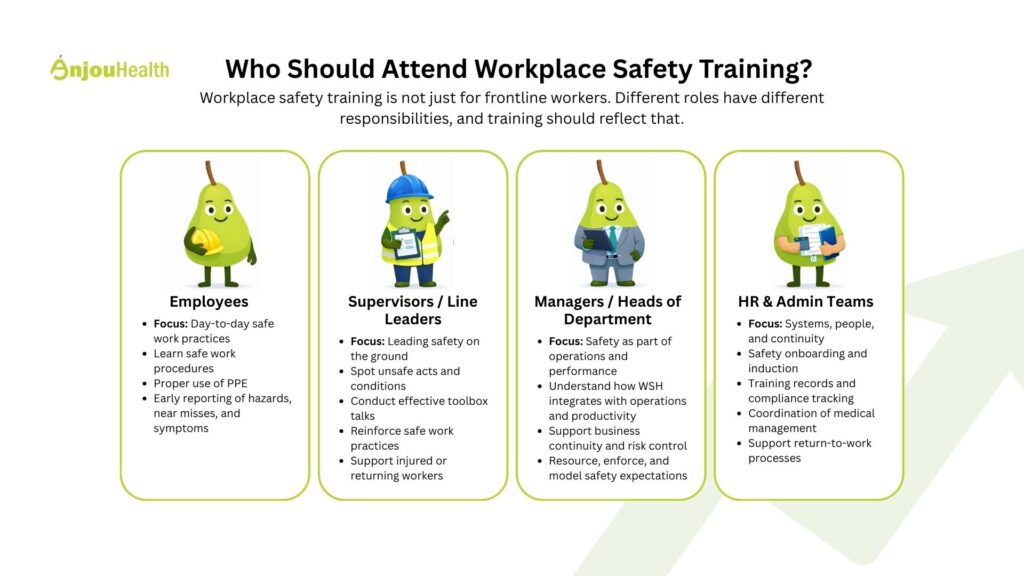
Workplace safety training is not just for frontline workers. Different groups have distinct responsibilities and training needs:
- Employees
Learn safe work procedures, use of PPE, and early reporting of hazards and symptoms.
- Supervisors / Line Leaders
Need skills to spot unsafe acts and conditions, conduct toolbox talks, reinforce safe work practices, and support injured or returning workers.
- Managers / Heads of Department
Require understanding of how WSH integrates with operations, productivity, and business continuity, plus their role in resourcing and enforcing safety.
- HR and Admin Teams
Play a critical role in onboarding, tracking training, coordinating medical management, and supporting return‑to‑work processes.
A common mistake is training only frontline staff while leaving supervisors and managers under‑prepared, even though their decisions strongly shape day‑to‑day safety behaviour.
How Often Should Workplace Safety Training Be Conducted?
There is no universal “once‑every‑X‑years” rule, but Singapore guidelines and industry practice support a continuous training cycle.
Best practice includes:
- Onboarding / Induction
Safety orientation for all new hires, contractors, and interns.
- Refresher Training
Typically, every 1–2 years or in line with course validity (e.g. risk management refresher courses updating participants on the latest WSH (Risk Management) Regulations and Risk Management Code of Practice).
- Trigger‑Based Training
Additional training when:- Incidents or serious near‑misses occur
- New equipment, technology, or processes are introduced
- Risk assessments are updated, and new hazards or controls are identified
Regular refreshers help reinforce safe habits, align staff with updated procedures, and keep the organisation compliant with evolving WSH requirements.
How to Choose a Workplace Safety Training Provider in Singapore
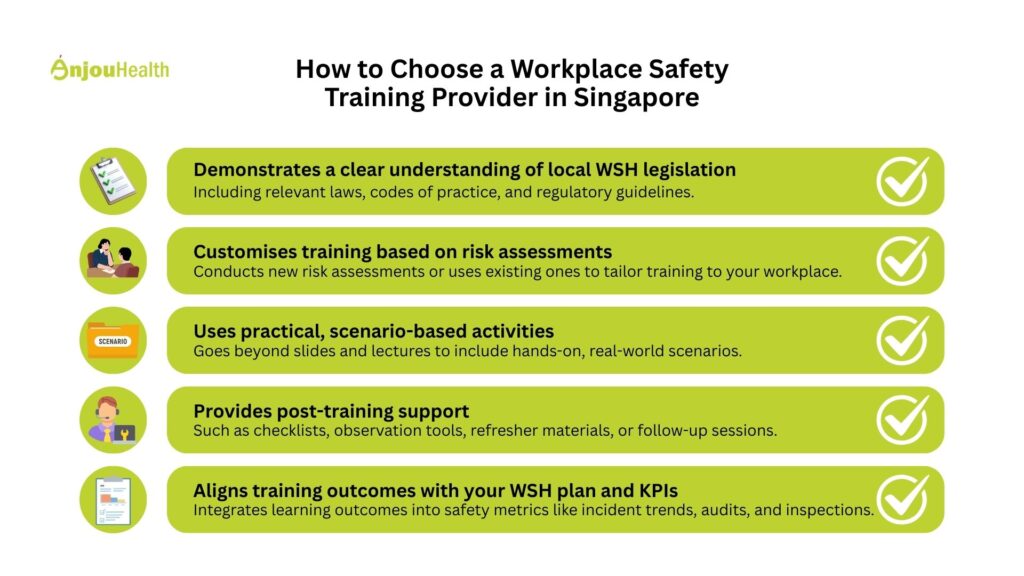
With many providers offering workplace safety training in Singapore, employers should look beyond generic course outlines. Consider whether the provider:
- Demonstrates clear understanding of local WSH legislation, codes of practice, and guidelines
- Conducts or uses existing risk assessments to customise training content
- Includes practical, scenario‑based activities rather than only slides and lectures
- Provides post‑training support such as checklists, observation tools, or follow‑up sessions
- Can integrate training outcomes into your WSH plan and KPIs (e.g., incident trends, audit findings)
Training that is disconnected from real work conditions may “tick the box” but often fails to change behaviour or reduce incidents.
How AnjouHealth Supports Workplace Safety Training
At AnjouHealth, workplace safety training is delivered as part of a broader risk management and injury prevention framework, not as a one‑off course.
Programmes are:
- Built on risk assessments – content is tailored to each site’s actual hazards and tasks
- Aligned with WSH expectations – incorporating principles from the WSH (Risk Management) Regulations, Total WSH, and relevant guidelines
- Integrated with injury management and RTW – supervisors and HR learn how to support early reporting, ergonomic adjustments, and return‑to‑work plans in line with Singapore’s RTW initiatives.
This approach helps organisations move from reactive compliance (training only after incidents) to proactive prevention and sustainable safety culture.
Frequently Asked Questions About Workplace Safety Training
- How long does workplace safety training usually take?
- It depends on the scope. In practice:
- Awareness‑level or toolbox sessions: 1–3 hour
- Role‑specific courses (e.g. risk management, RTW coordinator training): half‑day to 2.5 days
- Shorter, focused sessions delivered regularly tend to be more effective than long, one‑off seminars.
- It depends on the scope. In practice:
- Can workplace safety training be customised?
- Yes, and it should be. WSHC’s guidelines emphasise that training should be linked to actual workplace hazards and risk assessments, not generic content. Customised training consistently delivers better retention and behaviour change.
- Is refresher training required?
- While not every course has a statutory refresher requirement, WSH (Risk Management) guidance and best practice strongly encourage regular refreshers and updates when risk profiles change. Many organisations adopt 1–3 yearly cycles.
- Does workplace safety training really reduce injuries?
- Training alone is not enough, but when aligned with risk assessments, backed by management and reinforced by supervision, it is a key factor in reducing incident rates and work‑related health problems. Programmes like Total WSH in Singapore specifically include training to prevent ergonomic and musculoskeletal disorders.
Final Thoughts
Workplace safety training in Singapore is more than a regulatory checkbox. It is a practical, high‑impact tool that helps organisations:
- Protect employees from preventable harm
- Reduce incident‑related costs and downtime
- Demonstrate compliance with WSH duties
- Build a resilient safety culture aligned with business performance objectives
Employers who invest in relevant, role‑specific and well‑structured training, grounded in local WSH expectations and their own risk assessments, are better positioned to prevent injuries, support recovery and maintain safe, productive workplaces over the long term.
Looking for Practical Workplace Safety Training?
We support organisations in Singapore with role-specific, risk-based workplace safety training aligned with WSH expectations. Speak to AnjouHealth about your training needs.