Workplace Safety Programmes › WERA
⭐ Our Flagship Programme

Workplace Ergonomic
Risk Assessment (WERA)

Identify ergonomic hazards in high-risk roles before they become injuries with structured, evidence-based assessments and MOM/WSH-ready reporting.

Is WERA right for you?

Roles involving manual handling, lifting, or carrying
Workers in repetitive or fixed-posture tasks
Work-at-height or confined space operations
History of MSD complaints or workplace injuries
BizSAFE, ISO 45001, or MOM compliance needs
Employees returning to work after injury

52

Projects

1,200+

Professionals Trained

>95%

Client Satisfaction

1,200+

Professionals Trained

52

Projects

>95%

Client Satisfaction

What Is a Workplace Ergonomic
Risk Assessment?

A WERA is a structured, on-site evaluation of the physical demands placed on employees in their daily tasks. It identifies ergonomic risk factors, awkward postures, repetitive movements, forceful exertions, and environmental hazards before they result in musculoskeletal disorders (MSDs), injuries, or lost productivity.

Under Singapore's WSH Act and MOM guidelines, employers with high-risk roles are expected to proactively manage ergonomic hazards. AnjouHealth's WERA programme provides the rigorous assessment, documentation, and actionable recommendations your organisation needs.

Did you know? Musculoskeletal disorders are one of the leading causes of workplace injury and long-term absenteeism in Singapore and most are preventable with early identification and the right controls.

WERA is right for your organisation if you have:

  • Roles involving manual handling, lifting, or carrying
  • Workers in repetitive or fixed-posture tasks
  • Work-at-height or confined space operations
  • Production line or assembly workers
  • A history of MSD complaints or workplace injuries
  • BizSAFE, ISO 45001, or MOM compliance requirements
  • Employees returning to work after musculoskeletal injury
  • Facilities management, healthcare, or F&B operations

Industries & Roles We Assess

WERA is particularly valuable for industries with physically demanding or repetitive work but any role with ergonomic risk factors can benefit.

🏭

Manufacturing

Assembly, production lines, machine operation

🏗️

Construction

Work-at-height, heavy lifting, confined spaces

🏥

Healthcare

Patient handling, nursing, care roles

🏢

Facilities Management

Cleaning, maintenance, operations

🍽️

F&B & Hospitality

Kitchen, service, and logistics roles

📦

Logistics & Warehousing

Loading, packing, order fulfilment

🔧

Engineering & Utilities

Maintenance, technical, field operations

💻

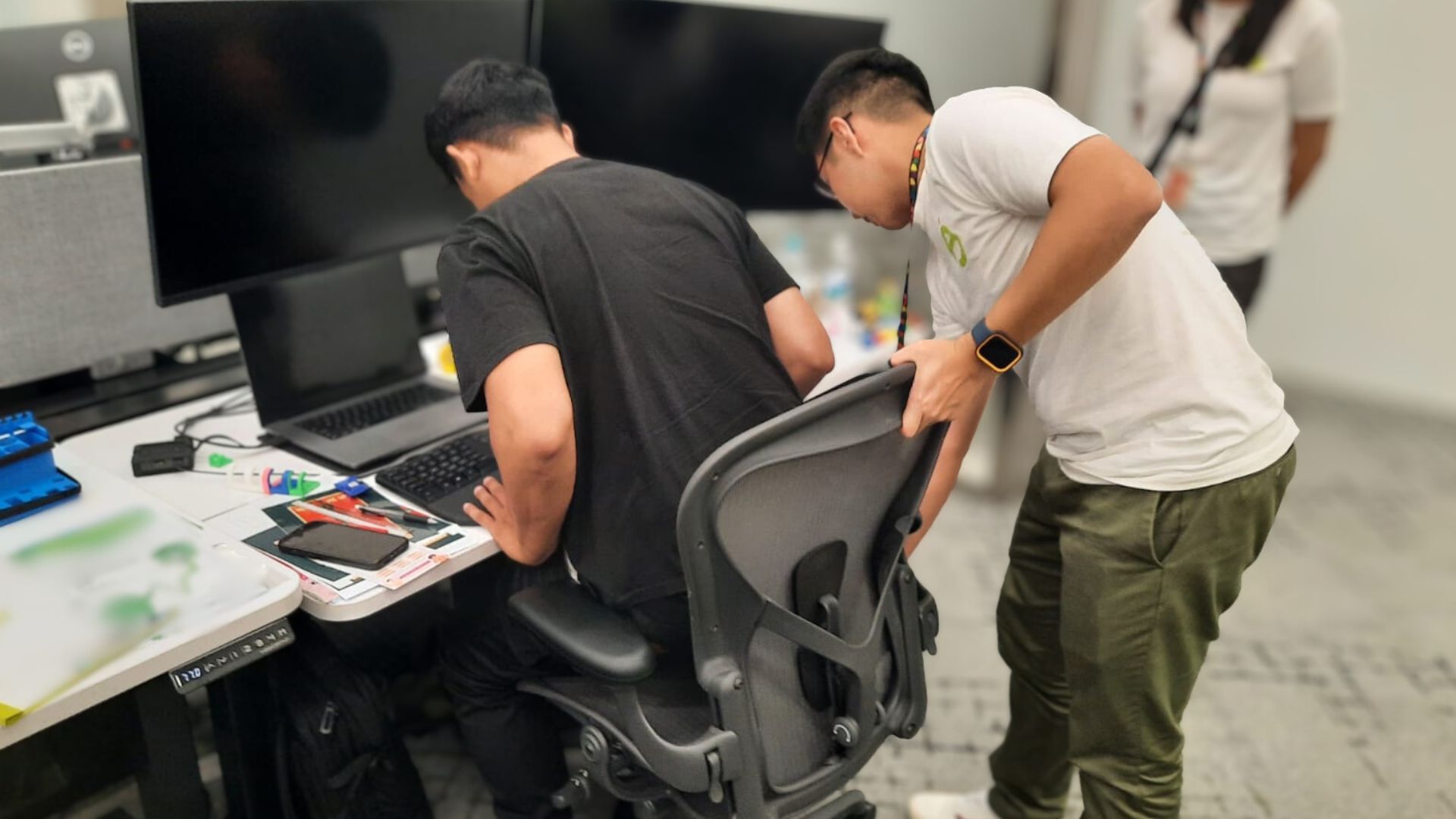
Office Environments

Desk-based, sedentary, screen-intensive roles

Our WERA Process

A rigorous five-step process designed to give you a complete picture of ergonomic risk and a clear plan to address it.

01

Consultation & Scoping

Step 1: Consultation & Scoping

We begin with a discovery call to understand your organisation's size, industry, workforce profile, and specific concerns. We identify which roles and work areas will be assessed, and agree on scope, timeline, and access requirements before any site visit takes place.

Role identification Risk prioritisation Scheduling Scope agreement
📋
You receive
A confirmed assessment scope document outlining roles to be assessed, timeline, and what to prepare before the site visit.
Step 1 of 5
02

On-Site Observation

Step 2: On-Site Observation & Task Analysis

Our ergonomists visit your workplace and observe workers performing their actual tasks in real working conditions. We document postures, movements, work patterns, equipment used, and environmental factors — capturing video and photo evidence of each assessed task.

On-site observation Video & photo capture Task breakdown Worker interviews Environmental assessment
🎥
You receive
Annotated photo and video documentation of all assessed tasks — ready for internal review and regulatory submissions.
Step 2 of 5
03

Risk Scoring & Analysis

Step 3: Risk Scoring & Analysis

Using internationally validated ergonomic tools — REBA (Rapid Entire Body Assessment) and RULA (Rapid Upper Limb Assessment) — we score each task against established risk thresholds. Risk levels are classified from low to high, with clear justification and root cause identification for each rating.

REBA scoring RULA scoring Manual handling assessment Risk classification Root cause analysis
📊
You receive
A risk score summary matrix showing all assessed roles, their REBA/RULA scores, risk classifications, and priority levels — easy to present to management.
Step 3 of 5
04

Report & Recommendations

Step 4: Report & Recommendations

We produce a comprehensive, MOM/WSH-ready report covering all assessed roles, risk scores, photographic evidence, and a prioritised action plan. Recommendations follow the Hierarchy of Controls — from engineering solutions and administrative controls through to PPE guidance.

Full risk report Hierarchy of Controls Prioritised action plan MOM-ready format Supervisor briefing
📄
You receive
A full WERA report, risk score matrix, photo evidence pack, prioritised action plan, and a supervisor briefing session to walk through findings.
Step 4 of 5
05

Implementation & Re-Assessment

Step 5: Implementation Support & Re-Assessment

We don't just hand over a report. Our team supports you through implementation — advising on control measures, training supervisors, and conducting a follow-up re-assessment to verify that risks have been effectively reduced and to update your documentation accordingly.

Control implementation advice Supervisor training Follow-up re-assessment Documentation update
🔄
You receive
A follow-up re-assessment report confirming risk reduction, with updated documentation reflecting your improved risk profile — ready for compliance submissions.
Step 5 of 5

The Impact of Proactive Ergonomic Assessment

Organisations that invest in ergonomic risk assessment consistently see measurable improvements across safety, productivity, and compliance.

📉

Fewer MSD Injuries

Early identification of high-risk tasks prevents musculoskeletal disorders before they occur.

WSH Compliance

MOM-ready documentation supports your BizSAFE, ISO 45001, and regulatory obligations.

Productivity Gains

Reduced physical strain means fewer sick days, less fatigue, and more consistent output.

💰

Lower Costs

Preventing one serious MSD injury saves far more than the cost of a full WERA engagement.

What Our Clients Say

Hear directly from our satisfied partners.

"
The WERA conducted by AnjouHealth gave us a clear picture of where our highest-risk tasks were. The report was thorough, easy to present to management, and gave us a practical action plan we could actually implement. We've since seen a noticeable reduction in MSD-related complaints from our production team.
RK
Ramesh Kumar
Data Operations Technician

Frequently Asked Questions

Questions specific to WERA. For broader workplace safety FAQs,
visit our FAQs page.

The on-site assessment typically takes half a day to a full day depending on the number of roles and work areas being assessed. The full report is usually delivered within 5–7 working days after the site visit.
The scope is agreed during the initial consultation. We can assess a single high-risk role or a full site with multiple job types — the programme is tailored to your needs and budget.
Under the WSH (Risk Management) Regulations, all employers must conduct risk assessments for all work activities — including ergonomic hazards. While "WERA" is not a specific legal term, ergonomic risk assessment is a core requirement for BizSAFE compliance and ISO 45001 certification.
WERA focuses on high-risk physical roles — manufacturing, construction, logistics, healthcare — involving manual handling, heavy lifting, or hazardous postures. A Workstation Ergonomics Assessment is designed for office and desk-based workers, addressing computer setup, chair adjustment, and sedentary work risks. Both are available through AnjouHealth.
Yes. AnjouHealth operates across Singapore, Malaysia, and Taiwan. We can coordinate multi-site assessments and provide reports aligned with the relevant regulatory frameworks in each country.
Pricing depends on the number of roles assessed, site complexity, and scope of deliverables. Contact us for a no-obligation quote — we'll scope the engagement based on your needs before providing a proposal.
ISO 45001:2018
ISO 45001:2018
Internationally certified
Bizsafe Star logo
BizSAFE Star
Singapore's highest WSH accreditation
SISO Member logo
SISO Member
Singapore Institution of Safety Officers
WSH Influencer logo
WSH Council Recognised
National WSH framework aligned

Ready to Identify Your Ergonomic Risks?

Talk to our team about scoping a WERA for your organisation.
No obligation, we'll assess your needs and provide a clear proposal.