Workplace Safety Programmes › Workstation Ergonomics Programme
Our Flagship ProgrammeWorkstation Ergonomics Programme
Reduce musculoskeletal strain, improve posture, and protect your desk-based workforce with structured ergonomic assessments, targeted interventions, and onsite physiotherapy support.
Is this right for you?
- Office or desk-based employees working 6+ hours daily
- Workers reporting neck, back, or shoulder discomfort
- Remote or hybrid teams with non-standardised setups
- Organisations seeing MSD-related sick leave or absenteeism
- BizSAFE, ISO 45001, or MOM compliance requirements
- Employees returning to work after musculoskeletal injury
If any of these apply, we can help.
52
Projects
1,984+
Participants Reached
>95%
Client Satisfaction
What Is the Workstation Ergonomics Programme?
Unlike basic furniture adjustments, AnjouHealth's Workstation Ergonomics Programme takes a comprehensive, evidence-based approach, combining detailed workstation assessments, personalised ergonomic coaching, physiotherapy expertise, and structured exercise interventions to deliver lasting improvements in employee health and comfort.
Under Singapore's WSH Act and MOM guidelines, employers have a duty to manage ergonomic risks across all work activities. For office-based roles, this means addressing sedentary behaviour, poor posture, and inadequately set-up workstations before they result in musculoskeletal disorders (MSDs), lost productivity, or prolonged sick leave.
This programme is right for your organisation if you have:
- Desk-based or hybrid employees with sedentary, screen-intensive roles
- Workers reporting recurring neck, back, wrist, or shoulder pain
- Non-standardised home office or remote work setups
- A history of MSD complaints, sick leave, or reduced productivity
- BizSAFE, ISO 45001, or MOM compliance requirements
- Employees returning to work after musculoskeletal injury
- Technology, finance, healthcare, or corporate office environments
- Manufacturing or industrial supervisory and admin staff
See Better Desk Habits in Action
See how everyday desk habits can place strain on the body, and why small workstation adjustments can make a meaningful difference.
Industries & Roles We Work With
Our programme is designed for any organisation with desk-based or hybrid employees, particularly industries where sedentary, screen-intensive roles are common.
Technology & IT
Software, data, engineering, and support roles
Finance & Banking
Office-based analysts, advisors, and operations teams
Healthcare
Administrative and desk-based clinical roles
Corporate & Professional Services
Legal, consulting, HR, and management teams
Manufacturing
Office and supervisory staff in industrial environments
Education & Government
Academic, admin, and public service roles
Retail & E-commerce
Back-office, operations, and customer service teams
Engineering & Construction
Project management, design, and site administration
Our 4-Module Programme
A structured, evidence-based approach that addresses ergonomic risk at every level, from workstation setup to individual recovery.
Step 1: Workstation Ergonomics Assessment
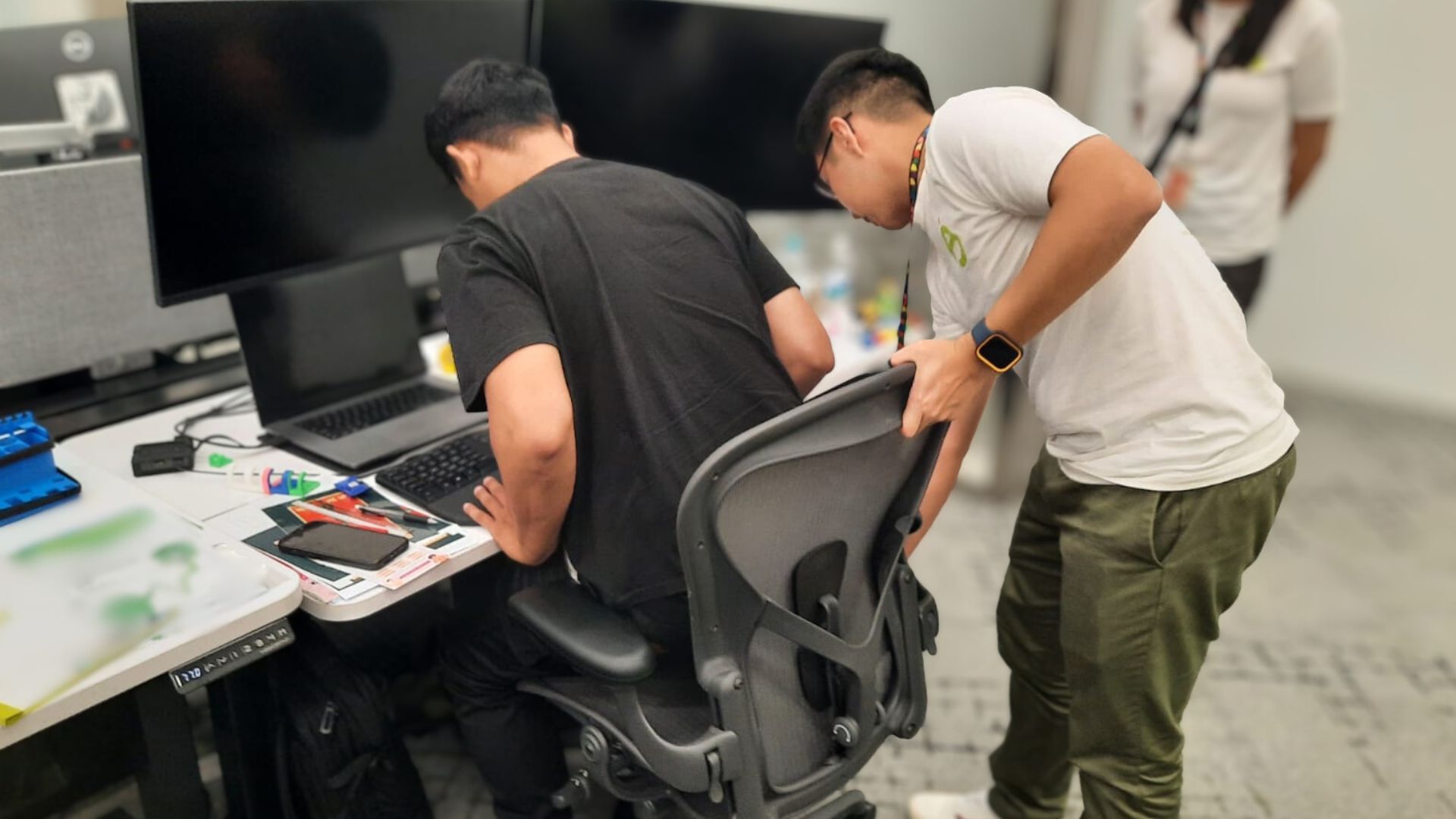
Our trained ergonomics specialists conduct detailed on-site assessments using customised video analysis to evaluate employee posture, movement patterns, and workstation setup. This identifies early signs of musculoskeletal strain and poor ergonomic configuration before injuries develop.
You receive
A risk summary report identifying high-priority employees and workstation issues, with initial recommendations for immediate action.
The Impact of a Proactive Ergonomics Programme
Organisations that invest in workstation ergonomics consistently see measurable improvements across health, productivity, and compliance.
Reduced Pain & Discomfort
Employees experience less back, neck, and shoulder strain with lasting results from targeted interventions.
Fewer Workplace Injuries
Proactive workstation adjustments prevent musculoskeletal disorders before they develop.
Improved Productivity
Healthier employees work more efficiently with fewer interruptions from pain or fatigue.
Lower Absenteeism
Less time lost to pain-related sick leave, with early intervention stopping issues before they escalate.
Higher Engagement & Morale
Employees feel valued and supported: a visible investment in wellbeing that strengthens workplace culture.
Frequently Asked Questions
For broader workplace safety questions, see our FAQs page.


Partner With Us!
Let's empower your workplace with leading health and safety solutions together.