


Written by
Bryan Sim, Business Development at AnjouHealth
An OHS programme developer at AnjouHealth focused on designing workplace health and safety initiatives that help organisations create safer, healthier, and more engaged environments. He works on translating ergonomic assessments and workplace risk insights into practical initiatives such as safety campaigns, wellbeing programmes, and workplace interventions that are impactful, sustainable, and aligned with operational needs.
Quick Summary: Early Signs of WMSD
Work-related musculoskeletal disorders (WMSD) often develop gradually and may start with mild discomfort before progressing into more serious injuries. Early symptoms such as muscle fatigue, stiffness, numbness, or reduced range of motion can be warning signs that workplace tasks or ergonomics need attention. Recognising these early indicators allows employees and employers to intervene early and prevent long-term injury.
In This Blog
- What Are Work-Related Musculoskeletal Disorders (WMSD)
- Why Early Detection Matters
- 7 Early Signs of WMSD Employees Should Not Ignore
- Common Workplace Risk Factors
- How Employers Can Help Prevent WMSD
What Are Work-Related Musculoskeletal Disorders (WMSD)

Work-related musculoskeletal disorders (WMSD) refer to injuries or conditions that affect muscles, joints, tendons, ligaments, and nerves due to workplace activities.
These conditions commonly develop from:
- Repetitive movements
- Awkward working postures
- Heavy lifting or manual handling
- Prolonged sitting or standing
- Poor workstation ergonomics
In Singapore workplaces, WMSD is among the most frequently reported work-related health issues across industries such as logistics, healthcare, construction, manufacturing, and office environments.
Why Early Detection Matters

WMSD rarely occurs suddenly. Instead, symptoms often develop slowly over time.
Ignoring early warning signs may lead to:
- Chronic pain
- Reduced productivity
- Long-term injury
- Increased absenteeism
- Workplace safety risks
Early identification allows organisations to address ergonomic issues, adjust workloads, and implement preventive measures before injuries become severe.
7 Early Signs of WMSD Employees Should Not Ignore
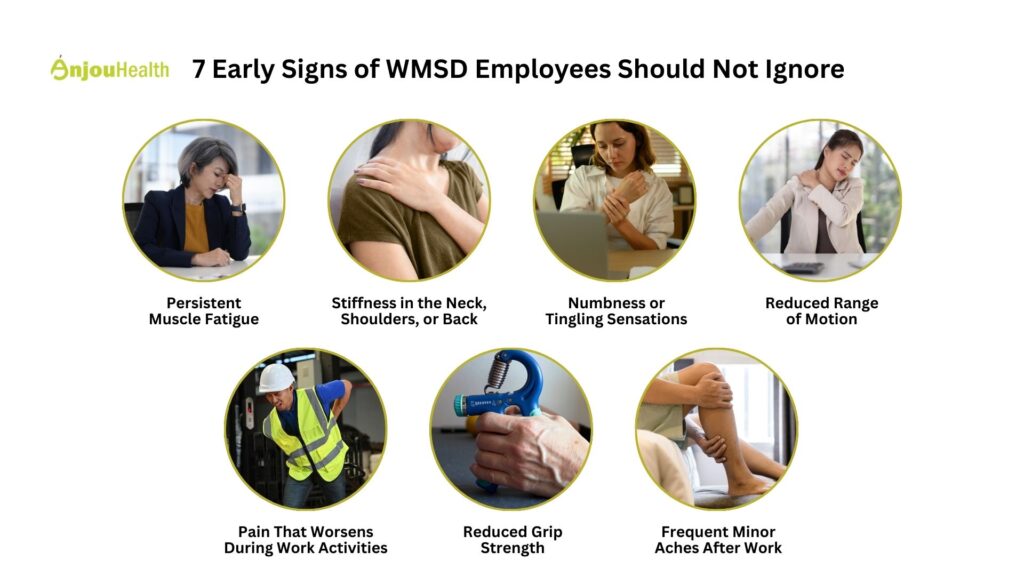
1. Persistent Muscle Fatigue
Employees may experience frequent muscle tiredness even during routine tasks. This may occur when muscles are repeatedly overworked without adequate recovery time.
2. Stiffness in the Neck, Shoulders, or Back
Morning stiffness or discomfort after long periods of sitting, standing, or repetitive tasks can indicate early musculoskeletal strain.
Office workers and manual labourers alike may experience this symptom.
3. Numbness or Tingling Sensations
Tingling or numbness in the hands, fingers, or arms can be an early sign of nerve compression caused by repetitive motions or poor ergonomics.
For example:
- Repetitive typing
- Continuous tool use
- Prolonged gripping tasks
4. Reduced Range of Motion
Employees may notice difficulty turning their neck, bending their back, or moving joints freely. This often develops when muscles and tendons become inflamed or overstrained.
5. Pain That Worsens During Work Activities
Pain that becomes more noticeable during specific tasks, such as lifting, typing, or operating machinery, can signal early WMSD development.
Ignoring this symptom may lead to more severe injuries.
6. Reduced Grip Strength
Employees who frequently handle tools, equipment, or materials may experience weaker grip strength. This can affect productivity and increase the risk of dropping objects or workplace accidents.
In some workplaces, especially where vibrating machinery or power tools are used regularly, prolonged exposure to vibration can also lead to conditions such as hand–arm vibration syndrome (HAVS). HAVS is a form of work-related musculoskeletal disorder associated with frequent contact with vibrating equipment and may cause symptoms such as reduced grip strength, numbness, and tingling in the hands and fingers.
7. Frequent Minor Aches After Work
Recurring aches in the shoulders, wrists, or lower back at the end of the workday may be a warning sign that the body is under repetitive strain.
Although these symptoms may appear mild initially, they can worsen over time if workplace conditions remain unchanged.
Common Workplace Risk Factors
Here are several workplace conditions that increase the risk of WMSD, including:
- Repetitive tasks
- Prolonged sitting or standing
- Poor workstation ergonomics
- Heavy manual handling
- Inadequate rest breaks
- Poor lifting techniques
Industries such as logistics, healthcare, manufacturing, and construction are particularly exposed to these risk factors.
How Employers Can Help Prevent WMSD

Employers play an important role in reducing WMSD risk through proactive workplace health and safety practices.
Common prevention measures include:
- Conducting ergonomic assessments
- Providing employee training on safe work techniques
- Improving workstation design
- Encouraging early reporting of discomfort
- Rotating tasks to reduce repetitive strain
Implementing these measures can significantly reduce workplace injuries and improve long-term employee overall well-being.
Learn More About WMSD in Singapore
Understanding the early signs of WMSD is the first step in preventing long-term workplace injuries.
To learn more about causes, risk factors, and prevention strategies, read our complete guide to Work-Related Musculoskeletal Disorders (WMSD) in Singapore.
Noticing Early Signs of WMSD in Your Team?
Early symptoms such as fatigue, stiffness, or recurring aches may indicate underlying ergonomic or workplace risk factors.
At AnjouHealth, we work with physiotherapists and workplace safety teams to identify ergonomic risks and support organisations in implementing practical workplace solutions to reduce WMSD.
Connect with us today to discuss your workplace safety and health needs.