
Written by Wesley Chee, Ergonomist at AnjouHealth and Physiotherapist at Physio & Sole Clinic
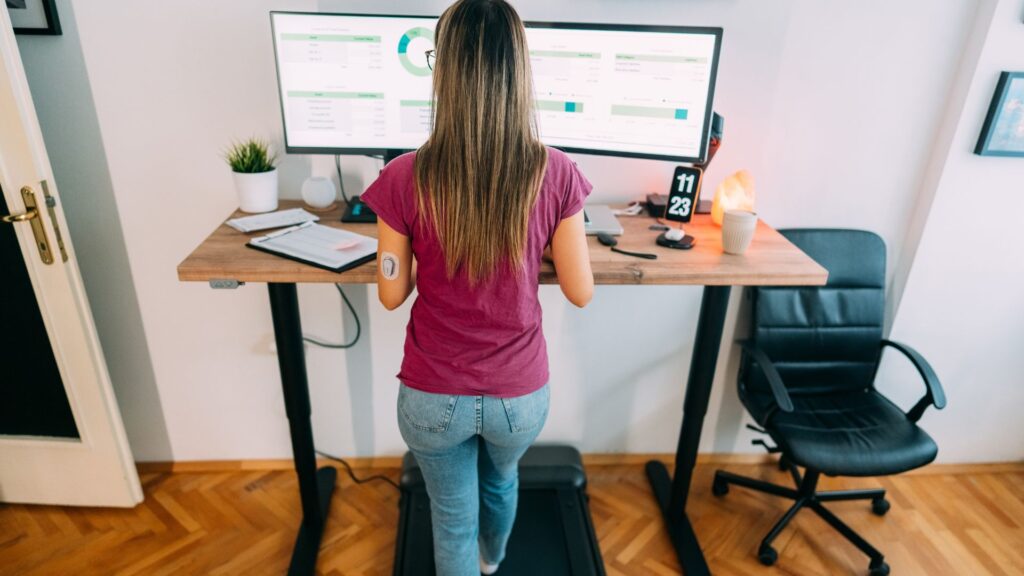
A standing desk is a height-adjustable workstation that lets you switch easily between sitting and standing positions throughout the workday. Unlike fixed desks, it rises from 60-120cm high, often with electric motors or hand cranks to keep your body in neutral postures, like elbows at 90 degrees and screen at eye level.
In Singapore’s long office hours, standing desks fit perfectly into workplace ergonomics practices under SS 514 standards and WSH guidelines. This AnjouHealth guide from our Workplace Ergonomics Singapore series connects to our workstation assessment, WMSD, and risk assessment posts.
Standing desk recommendations are commonly included as part of workplace ergonomics assessments, workstation setup guidance, and ergonomic awareness programmes supporting safer office environments in Singapore.
Why Sitting All Day Is Dangerous
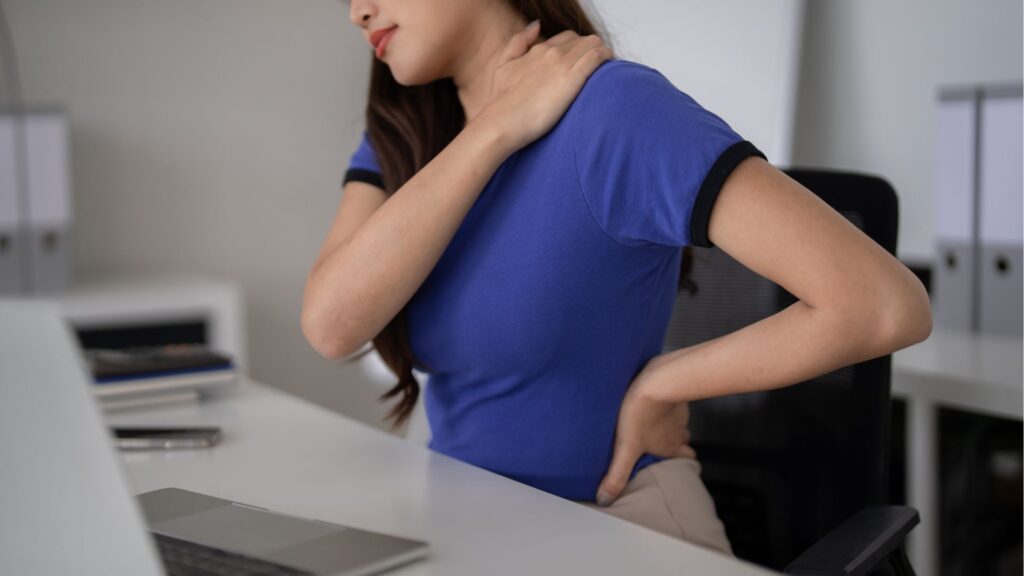
After 1-2 hours, your spinal discs undergo compressive loading and temporary deformation. Back pain hits 70% of desk workers here.
Blood slows in your legs, raising clot risks. Hip muscles tighten, pulling your back out of line.
You burn less energy and feel sleepy. Leaning your head forward strains your neck like carrying a bowling ball.
| Sitting Problem | What Happens | Standing Desk Fix |
| Spinal Compression | Hurts lower back | lifts pressure by 50% |
| Reduced Blood Circulation | Swollen feet | Gets blood moving |
| Tight hips | Can’t stand straight | Resets posture |
| Forward neck posture | Headaches daily | Screen at eye level |
Easy Fix: Standing desks fix this in 30 seconds. No more “tech neck” or “corporate belly.”
Do Standing Desks Boost Workplace Ergonomics
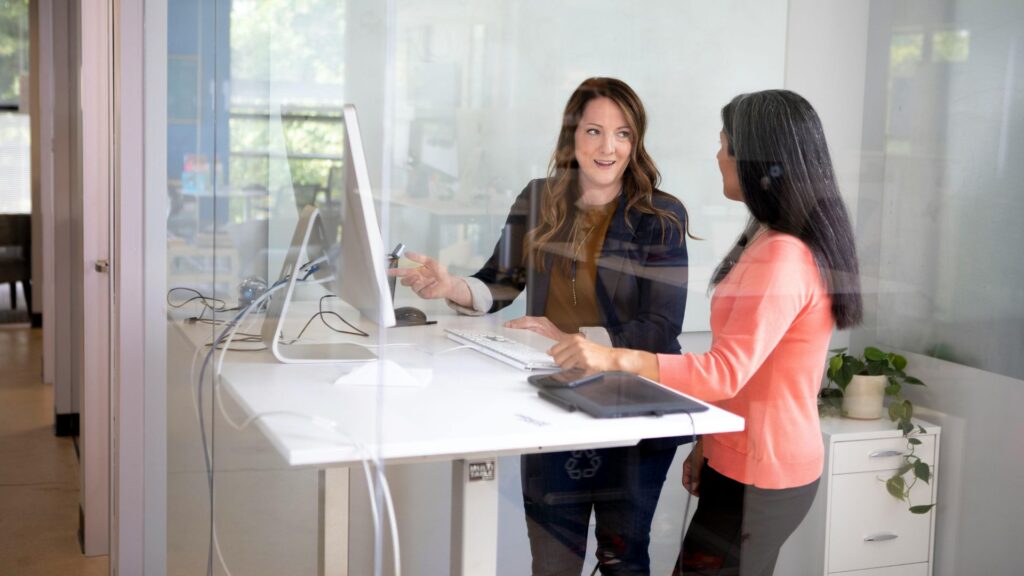
Yes, balanced use cuts sitting time by 20-40%, easing neck, back, and shoulder strain within 4-6 weeks. MOM supports posture changes to reduce MSD risks, and local office workers report less end-of-day fatigue, especially in hybrid roles. The trick: alternate positions to avoid leg tiredness, ensuring full SS 514 compliance.
Fixed desks encourage slouching, and standing desks add variety that ties into our workstation series.
How Standing Desks Support Workplace Ergonomics in Singapore
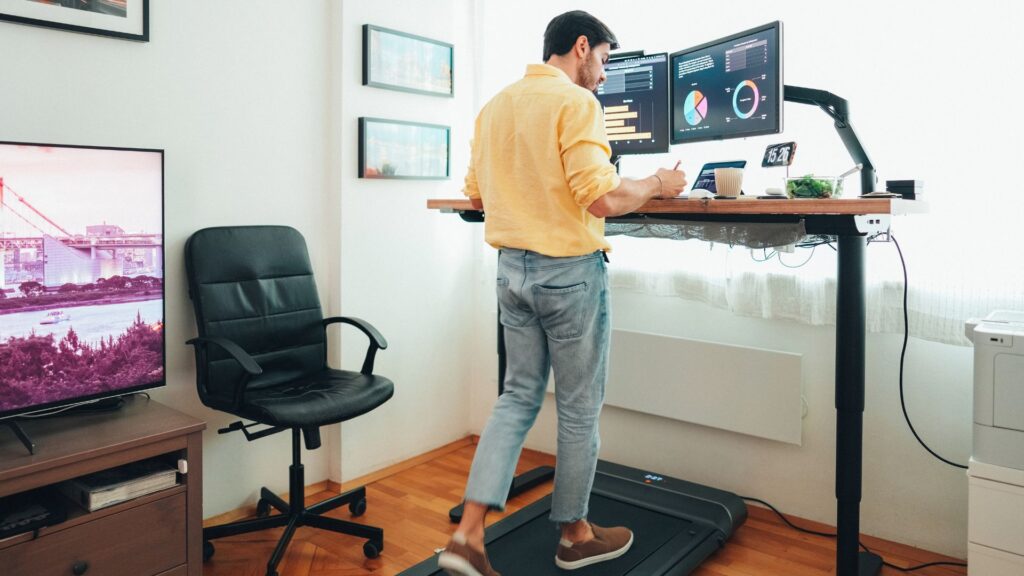
Standing desks fix sedentary issues at the heart of workplace ergonomics in Singapore.
| Benefit | How It Delivers | Positive Results |
|---|---|---|
| Pain Relief | Reduces compressional spinal pressure by 50% vs. sitting | Fewer WMSD claims during 8+ hour shifts |
| Energy Surge | Enhances circulation, fights slumps | Tackles common post-lunch dips |
| Health Edge | Burns 50-200 extra calories daily | Counters desk-bound routines |
| Mood Lift | Releases endorphins through motion | Supports WSH mental wellness goals |
| Compliance Win | Meets SS 514 adjustability needs | Simplifies MOM workplace audits |
Teams see less absenteeism, with fast cost recovery.
Common Mistakes to Avoid
- Standing too long without breaks (aim for less than 2 hours continuous).
- Wrong height (elbows not 90°).
- Skipping mats (causes foot fatigue).
- Poor posture (locking knees, slouching).
Health Benefits Beyond Ergonomics

Standing desks don’t just fix posture, they boost your whole body and mind during Singapore’s long workdays.
- Better Mood & Energy
Standing sparks circulation, cutting afternoon slumps. Cleveland Clinic notes improved focus and task completion, perfect for post-lunch drag in air-conditioned offices. Workers feel 20% more alert after standing breaks.
- Heart & Diabetes Protection
Less sitting, better blood sugar control, and lower heart strain. Studies show standing 2 hours post-meal stabilises insulin without diet changes, key for desk jobs with kopi breaks.
- Weight Management Edge
Burn 50-200 extra calories daily through subtle movement. Reduces obesity risk tied to 6+ hour sitting, matching Singapore’s fight against metabolic syndrome in corporate teams.
- Brain Reset Power
Standing helps ADHD-like focus issues by improving blood flow to the brain. Short stand breaks “reset” mental fatigue better than coffee for easy tasks.
Step-by-Step Safe Setup for Workplace Ergonomics
Set up right for quick wins aligned with WSH rules.
- Measure Heights: Standing, elbows 90°, shoulders relaxed (100-115cm average). Sitting, knees and feet flat on the ground. Save presets.
- Smart Layout: Centre keyboard and mouse to avoid stretching arms.
- Essential Add-Ons: Anti-fatigue mat, footrest (alternate feet), comfy shoes.
- Monitor Placement: Top edge at eye level, 50-70cm away; use risers for laptops.
- Lighting Adjustment: Add even light and bias lighting to cut glare.
- Chair Pairing: Match desk height fully; sit with back support.
- Quick Test: Adjust for 5 minutes, then check hourly.
- Clean Workspace: Clear desk of clutter to minimise overreaching
Easy reference table:
| Component | Standing Setup | Sitting Setup | Quick Fix |
| Desk Height | Elbows parallel to the floor | Thighs level with the floor | Use memory buttons |
| Monitor | Eyes to the top edge | Arm’s length away | Add arm mount |
| Feet/Legs | Shift weight on the mat | Flat on the floor or footrest | Swap every 15 minutes |
| Wrists/Arms | Neutral and close to the body | Elbows tucked in | Keyboard tray option |
When should organisations introduce standing desks?
Standing desks are especially useful for employees performing prolonged seated work such as administrative, IT, and workstation-based roles. Introducing adjustable workstations supports movement variation and helps reduce ergonomic risk exposure across office environments.
Frequently Asked Questions:
- Are standing desks WSH-compliant in Singapore workplaces?
Yes, height-adjustable standing desks meet SS 514:2016 standards for office ergonomics when they allow neutral postures (elbows 90°, screen eye-level). MOM endorses alternating positions to prevent MSDs.
- How long should I stand at a standing desk each day?
Start with 1-2 hours total, split into 20-30 minute bursts followed by sitting. Gradually build to 4 hours max, avoid continuous standing over 2 hours to prevent leg fatigue, per WSH guidelines.
- How standing desks support WMSD prevention?
Alternating between sitting and standing helps reduce prolonged static posture exposure, which is a common contributor to work-related musculoskeletal disorders (WMSDs). Standing desk programmes are often introduced as part of broader workplace ergonomics initiatives across Singapore organisations.
- Do standing desks really improve productivity in Singapore offices?
Many users report 10-15% focus gains from better circulation and fewer slumps, especially post-lunch in air-conditioned spaces. Local studies confirm reduced fatigue without hurting output.
- Who shouldn’t use a standing desk?
Avoid if pregnant, with varicose veins, or joint issues, check with a doctor first.
Workplace Ergonomics Resources from AnjouHealth
This guide is part of AnjouHealth’s Workplace Ergonomics Singapore resource series supporting organisations in reducing ergonomic risks and improving workstation safety outcomes.
- Workplace Ergonomics Singapore: Office Setup & WSH Guidelines for Employers
(Practical guidance on workstation setup and ergonomics compliance considerations across Singapore workplaces.)
- Workstation Ergonomics Assessment Singapore Guide
(Understand how ergonomics assessments identify risks and improve employee comfort and productivity.)
- What Is an Ergonomic Risk Assessment in Singapore?
(Learn how ergonomic risk assessments support hazard identification and WSH compliance.)
Explore our full Occupational Health & Workplace Safety Blog for practical employer-focused guidance on improving workforce health and reducing WMSD risks in Singapore workplaces.
Elevate Your Workplace Ergonomics Today
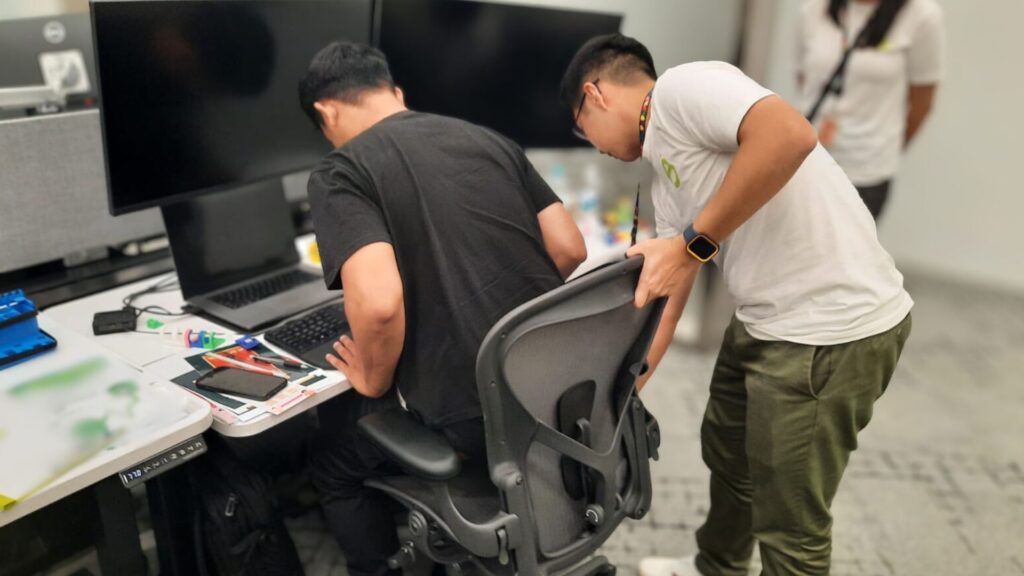
Standing desks turn everyday desks into flexible, health-focused tools that fight MSDs effectively. Book an AnjouHealth assessment for your team.