

Written by
Bryan Sim, Business Development at AnjouHealth
An OHS programme developer at AnjouHealth focused on designing workplace health and safety initiatives that help organisations create safer, healthier, and more engaged environments. He works on translating ergonomic assessments and workplace risk insights into practical initiatives such as safety campaigns, wellbeing programmes, and workplace interventions that are impactful, sustainable, and aligned with operational needs.
Quick Summary: Workplace Hazards in Singapore
Workplace hazards in Singapore can exist in any setting, from offices and clinics to logistics facilities and construction sites. By identifying hazards early, employers can prevent workplace accidents, improve employee well-being, and comply with Singapore’s Workplace Safety and Health (WSH) regulations.
This article outlines the key types of workplace hazards, the importance of proactive identification, and step-by-step strategies for managing risks effectively under the WSH framework.
In This Blog
- What Are Workplace Hazards
- Why Hazard Identification Matters
- Common Workplace Hazards in Singapore
- Workplace Safety Trends in Singapore
- How to Identify Workplace Hazards (Step-by-Step)
- Tools Used for Hazard Identification
- When to Conduct Hazard Identification
- Practical Workplace Hazard Checklist
- Frequently Asked Questions
What Are Workplace Hazards?
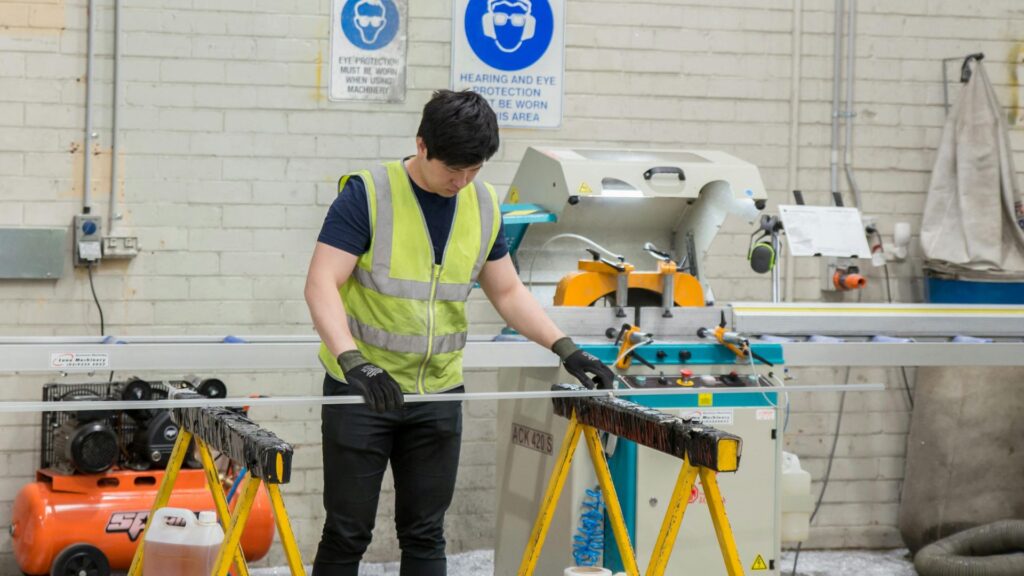
A workplace hazard refers to anything that can cause injury, illness, or harm to employees. In Singapore, workplace hazards are broadly classified under the Workplace Safety and Health (Risk Management) Regulations, which require employers to systematically identify and control risks across every work process.
Common sources of hazards include:
- Unsafe machinery or equipment
- Environmental conditions such as noise, heat, or insufficient lighting
- Poor workstation ergonomics or repetitive motion tasks
- Exposure to chemicals and hazardous substances
- Unsafe work practices or lack of supervision
Under the WSH (Risk Management) Regulations (2024), every employer and occupier of a workplace must conduct hazard identification, assess risks, and implement preventive measures to safeguard workers.
Why Hazard Identification Matters

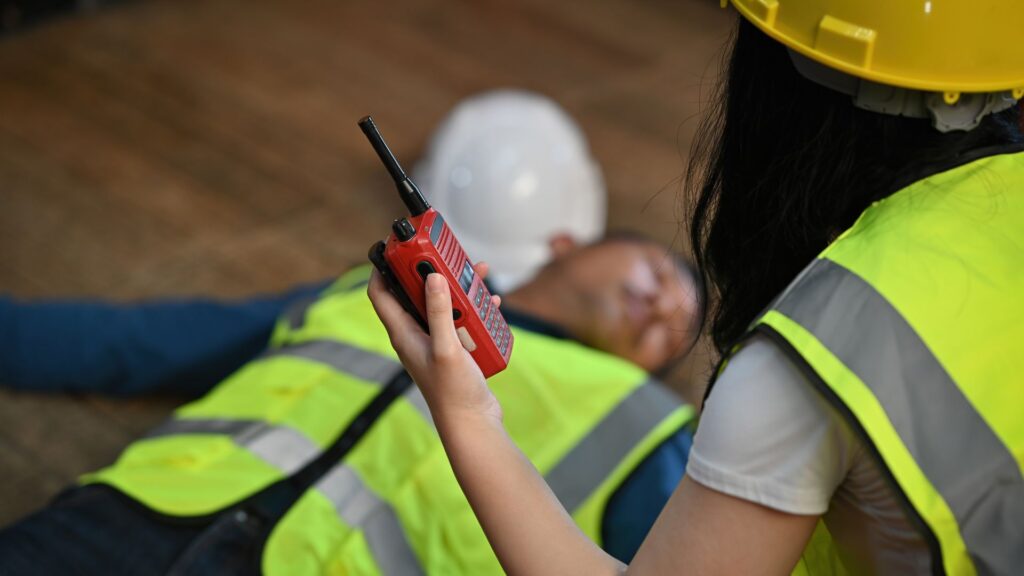
Overlooking hazards causes most workplace incidents, not unusual conditions. For example:
- Cluttered walkways that lead to slips or trips
- Improper workstation ergonomics causing long-term musculoskeletal strain
- Unsafe manual handling of heavy loads performed repeatedly
Early hazard identification allows organisations to take proactive measures before these risks escalate into injuries or lost productivity. Regular reviews also help maintain compliance with MOM’s WSH standards, reducing enforcement risks and compensation costs.
Workplace Safety Trends in Singapore

Singapore’s overall workplace safety performance has improved in recent years due to sustained WSH campaigns and regulatory enforcement. However, recurring safety lapses continue to occur, especially from preventable causes such as slips, trips, and equipment-related incidents.
According to the WSH Statistics Report 2024:
- Slips, trips, and falls accounted for one of the top three causes of major injuries.
- Overexertion and ergonomic strain remain major contributors to non-fatal workplace injuries.
- Most incidents occurred in construction, transport, manufacturing, and healthcare sectors.
To address these challenges, Singapore workplaces are strengthening proactive safety measures, including:
- Routine hazard identification and risk assessments
- Ergonomic risk mapping
- Enhanced safety training and supervision
- Encouraging reporting of near-misses and unsafe conditions
How to Identify Workplace Hazards: Step by Step
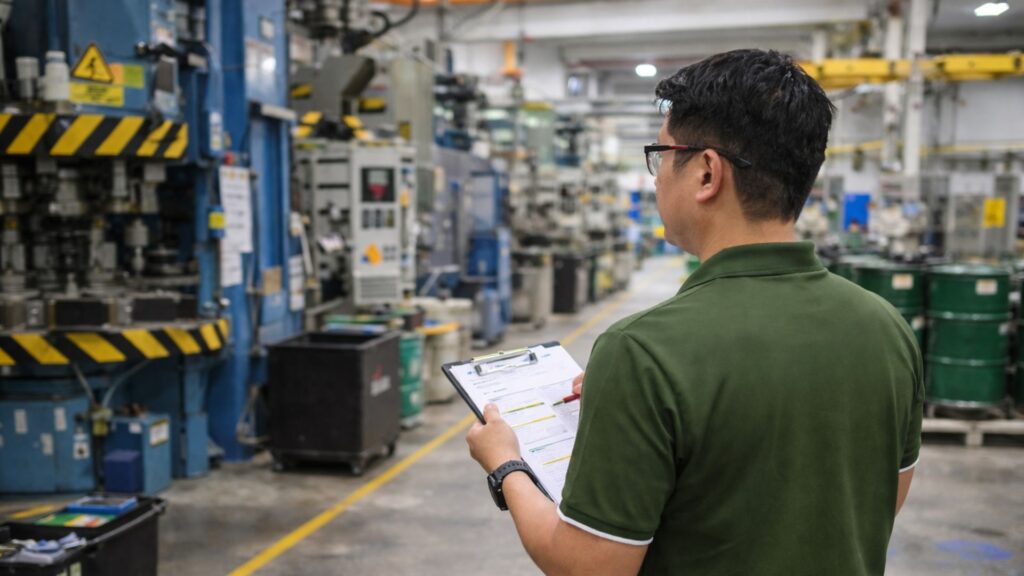
Identifying workplace hazards is a structured process. Many organisations follow a Hazard Identification and Risk Assessment (HIRA) approach to systematically recognise risks and determine appropriate control measures.
The process typically involves several key steps.
1. Understand Work Activities
Begin by analysing daily work tasks and processes. Break complex operations into smaller steps to understand how work is actually performed. This helps reveal task-specific hazards that may not be immediately obvious.
2. Observe the Workplace
Conduct workplace walkthroughs to identify visible hazards. This may include blocked exits, trip hazards, machine defects, poor housekeeping, or ergonomic issues. Observations should be carried out in the actual working environment where tasks are performed.
3. Consult Employees
Employees who perform the work often have the best understanding of potential hazards. By encouraging open communication with frontline staff, organisations can uncover hidden risks, unsafe practices, and near-miss incidents that might otherwise go unnoticed.
4. Review Incident and Near-Miss Records
Past incidents, near-miss reports, and injury records provide valuable insights into recurring safety issues. Analysing these records helps organisations identify patterns and prioritise areas that require immediate attention.
5. Evaluate Risk Levels
Once organisations identify hazards, they should assess the likelihood and severity of harm using a risk matrix or structured evaluation framework to prioritise hazards that require immediate action.
6. Implement Control Measures Using the Hierarchy of Controls
Once risks are evaluated, organisations should implement control measures using the Hierarchy of Controls, a widely recognised framework for managing workplace risks.
The hierarchy prioritises the most effective control methods:
- Elimination – remove the hazard entirely
- Substitution – replace the hazard with a safer alternative
- Engineering controls – isolate people from hazards through design or equipment
- Administrative controls – introduce policies, procedures, or training to reduce exposure
- Personal Protective Equipment (PPE) – Where risks remain, organisations should provide Personal Protective Equipment (PPE) to help protect workers.
Using this structured approach helps organisations manage workplace hazards more effectively and reduce the likelihood of workplace incidents.
Tools Used for Hazard Identification
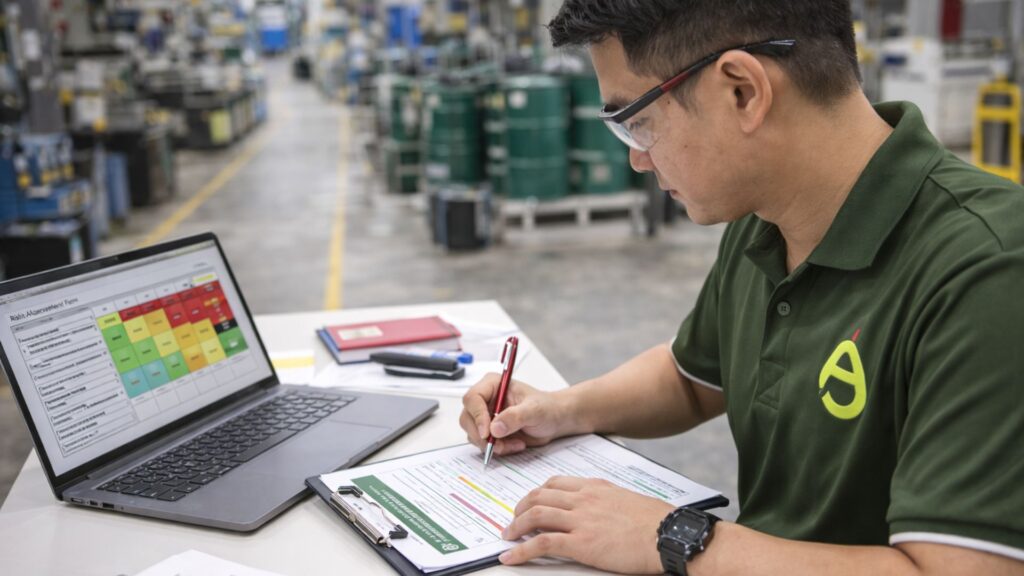
Several structured tools help employers identify and control hazards systematically:
- Risk Assessments (RA): Mandatory under WSH law to evaluate hazards and prioritise control measures.
- Job Safety Analysis (JSA): A task-focused method for identifying hazards before work begins.
- Safe Work Procedures (SWP): Step-by-step instructions ensuring tasks are performed safely.
- Workplace Safety Inspections: Regular checks to identify new or changing hazards in facilities.
Each method supports continuous improvement under the Total WSH approach, integrating safety, health, and well-being management.
When Hazard Identification Should Be Conducted
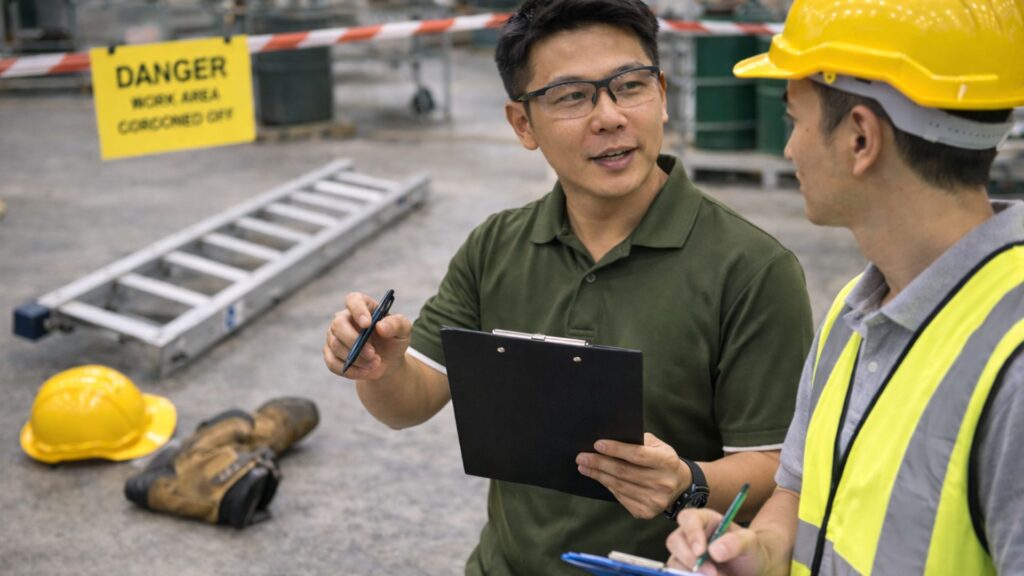
Hazard identification should be continuous, not a one-time exercise. Conduct it during:
- Start-up of new work processes or projects
- Installation or modification of equipment
- Following workplace incidents or near-misses
- When safety complaints or observations are raised
- During scheduled WSH management system reviews
Ongoing hazard identification fosters a strong safety culture and aligns with the Plan-Do-Check-Act (PDCA) cycle used in WSH management frameworks.
Practical Workplace Hazard Checklist

Use this checklist for periodic hazard screening:
- Are walkways and emergency exits clear of obstructions?
- Are wet areas marked and cleaned promptly?
- Are workstations ergonomically set up?
- Are employees trained in proper lifting techniques?
- Are chemicals properly labelled, stored, and handled?
- Are machine guards in place and functional?
- Are employees encouraged to report unsafe conditions promptly?
These checkpoints promote early detection and continuous safety improvement.
Occupational Health & Workplace Safety Resources from AnjouHealth
This article is part of AnjouHealth’s Occupational Health & Workplace Safety Resource Series, developed to help employers, HR professionals, and WSH officers strengthen safety systems.
You may also find the following related resources helpful:
- Common Workplace Safety Hazards in Singapore: Overview of common risks and how to mitigate them.
- Workplace Safety Training in Singapore: How structured training helps improve hazard awareness.
- Workplace Injury Management in Singapore: Supporting recovery and return-to-work strategies.
Visit our Occupational Health & Workplace Safety Blog for more evidence-based guidance.
Frequently Asked Questions
1. What are workplace hazards?
Any condition, activity, or substance that can cause harm to workers’ health or safety.
2. What are common workplace hazards in Singapore?
Slips, trips, machinery injuries, manual handling issues, ergonomic strain, chemical exposure, and workplace stress.
3. Who is responsible for identifying workplace hazards?
Employers hold primary responsibility under the WSH (Risk Management) Regulations, but employees and supervisors share accountability through hazard reporting and participation in safety programmes.
4. How often should hazard identification be carried out?
Regularly, especially when processes, equipment, or work environments change, or after incidents.
5. What tools can be used for hazard identification?
Risk Assessments, Job Safety Analyses (JSA), Safe Work Procedures, and workplace inspections.
Want to Strengthen Workplace Safety in Your Organisation?

Early hazard identification is one of the most effective ways to prevent injuries and reinforce a safety-conscious culture.
At AnjouHealth, we partner with organisations across Singapore, Taiwan, and Malaysia to conduct workplace hazard assessments, ergonomic risk evaluations, and WSH compliance planning.
Contact us today to start building a safer and healthier workplace.