
Written by Jacob Chee, Ergonomics Consultant at AnjouHealth
The problem: discomfort that quietly becomes “normal”
One of the most concerning things I hear during workplace consultations is this:
“I thought the discomfort was just part of office work.”
In Singapore’s office-based work culture, many employees accept neck stiffness, shoulder tightness, or lower back aches as normal side effects of long hours at a desk. These symptoms often don’t start suddenly or dramatically. They build up quietly, day after day, until discomfort begins to affect concentration, mood, and eventually attendance.
In my experience, by the time someone reports pain, the ergonomic risk has usually been present for a long time.
This is exactly why workstation ergonomics assessment in Singapore plays such an important preventive role.

Why ergonomic issues are often overlooked (and why that’s risky)
Most ergonomic risks don’t announce themselves loudly. Poor screen height, awkward keyboard positioning, prolonged sitting, or laptop-only setups rarely cause immediate injury.
Instead, they lead to:
- Gradual muscle fatigue
- Repeated strain on the neck, shoulders, wrists, and lower back
- Reduced movement and circulation
- Increased risk of work-related musculoskeletal disorders (WMSDs)
What concerns me most is that these risks often affect high-performing employees, people who work through discomfort without speaking up.
Without a proper office workstation ergonomic assessment, organisations may only notice the issue when productivity drops or sick leave increases.

The Singapore context: why workstation ergonomics matters locally
This issue isn’t just anecdotal; it’s reflected in national data.
According to the Workplace Safety and Health Council (WSHC)
- Musculoskeletal disorders are consistently among the top-reported work-related health conditions in Singapore
- In 2011, the economic loss due to WRMSDs was estimated to be $3.5 billion, equivalent to 1% of Singapore’s GDP.
In today’s hybrid and laptop-heavy work culture, these risks are even more pronounced, particularly when home workstations are improvised or poorly set up.

What is a workstation ergonomics assessment in Singapore?
A workstation ergonomics assessment is a structured evaluation of how an employee’s workstation setup, posture, and work habits interact with their body.
Rather than focusing only on furniture, a proper workstation ergonomic assessment in Singapore considers:
- Chair, desk, screen, keyboard, and mouse setup
- Posture and movement patterns throughout the workday
- Task demands and duration
- Break habits and work variability
- Individual factors such as body proportions and role requirements
From a practical standpoint, the goal is simple: Reduce unnecessary strain and support comfortable, sustainable work.
When is a workstation ergonomics assessment needed?
Companies in Singapore should consider a workstation ergonomics assessment when:
- Employees report neck, shoulder, wrist, or back discomfort
- There is an increase in musculoskeletal-related sick leave
- New hires are setting up workstations
- Job roles or work demands change
- Offices relocate or are redesigned
- Hybrid or remote work arrangements begin
- Employees return from injury or prolonged absence
From my experience, assessments are most effective when they are proactive, not reactive.

Who needs a workstation ergonomics assessment?
A workstation ergonomics assessment is relevant for:
- Office-based employees
- HR professionals and people managers
- Workplace safety officers
- New hires adapting to unfamiliar workstations
- Hybrid and work-from-home employees
- Employees reporting fatigue, stiffness, or discomfort
What happens during a workstation ergonomic assessment?
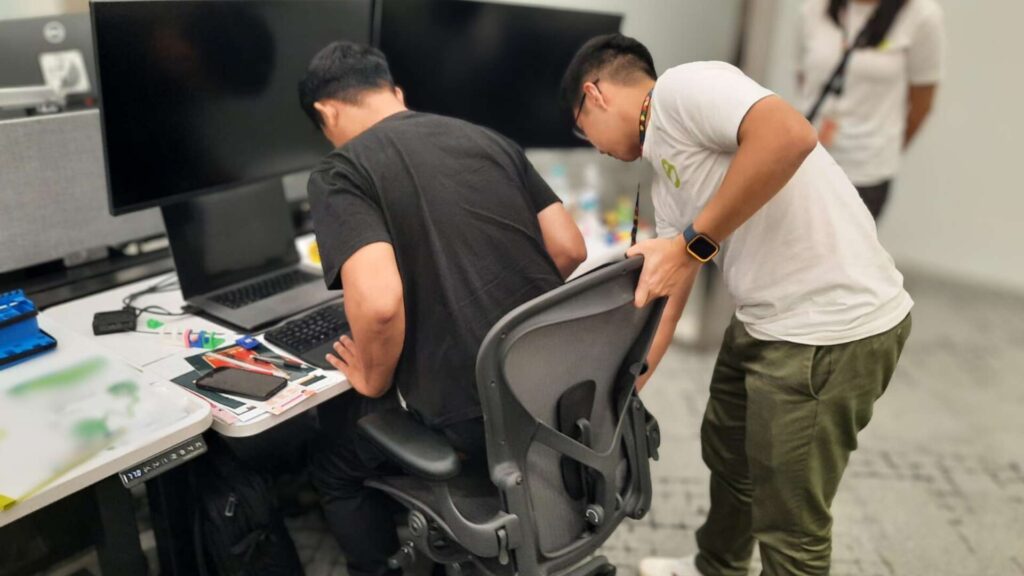
During a typical office workstation ergonomic assessment, I will:
- Observe how the employee works naturally
- Ask about discomfort, fatigue, and daily routines
- Review chair height, screen position, and input devices
- Make immediate adjustments where possible
- Explain why each adjustment matters
- Provide clear, practical recommendations
Education is a key part of the process. When employees understand why changes are made, they are far more likely to maintain healthier habits.

What are the benefits of a workstation ergonomics assessment?
A well-conducted workstation ergonomics assessment in Singapore can:
- Reduce physical discomfort and fatigue
- Improve posture awareness and movement habits
- Support productivity and focus
- Reduce the risk of WMSDs
- Demonstrate employer commitment to employee well-being
- Support compliance with workplace safety expectations
How often should workstation ergonomics be assessed?
Assessments should be reviewed:
- When work demands change
- After office relocations or workstation upgrades
- When discomfort or injury is reported
- Periodically, as part of workplace health initiatives
Who conducts workstation ergonomics assessments in Singapore?
Workstation ergonomics assessments are commonly conducted by:
- Ergonomics consultants
- Occupational health professionals
- Trained workplace safety practitioners
Professional assessments help ensure recommendations align with recognised ergonomics and WSH best practices in Singapore.
How much does a workstation ergonomics assessment cost in Singapore?
The cost of a workstation ergonomics assessment in Singapore varies depending on:
- Number of employees assessed
- On-site vs remote delivery
- Scope and reporting requirements
From a workplace safety perspective, early ergonomic intervention is generally more cost-effective than managing injuries after they occur.

A personal reflection from the field
One thing I’ve learned over the years is that ergonomics isn’t really about chairs or desks.
It’s about people.
When organisations take ergonomics seriously, employees feel supported, not just physically, but culturally. A workstation ergonomics assessment often becomes the starting point for better conversations about health, workload, and sustainability at work.

Ready to take the next step?
If your employees are experiencing discomfort, work arrangements have changed, or workstations haven’t been reviewed recently, a workstation ergonomics assessment in Singapore may be timely.
A structured assessment provides clarity, practical recommendations, and long-term benefits for both employees and organisations.
Book a call with us to discuss whether a workstation ergonomics assessment would benefit your workplace.
FAQ: Workstation Ergonomics Assessment in Singapore
- What is a workstation ergonomics assessment?
It evaluates how workstation setup, posture, and work habits interact with the body to identify ergonomic risks.
- Why is a workstation ergonomics assessment important?
It helps prevent work-related musculoskeletal disorders by identifying risks early.
- When should you get a workstation ergonomic assessment?
When discomfort is reported, work arrangements change, or as part of proactive workplace safety measures.
- Who needs a workstation ergonomics assessment?
Office workers, hybrid workers, new hires, and employees experiencing fatigue or discomfort.
- How long does a workstation ergonomics assessment take?
Typically, 30–60 minutes per employee.