

Written by
Bryan Sim, Business Development at AnjouHealth
An OHS programme developer at AnjouHealth focused on designing workplace health and safety initiatives that help organisations create safer, healthier, and more engaged environments. He works on translating ergonomic assessments and workplace risk insights into practical initiatives such as safety campaigns, wellbeing programmes, and workplace interventions that are impactful, sustainable, and aligned with operational needs.
Overview
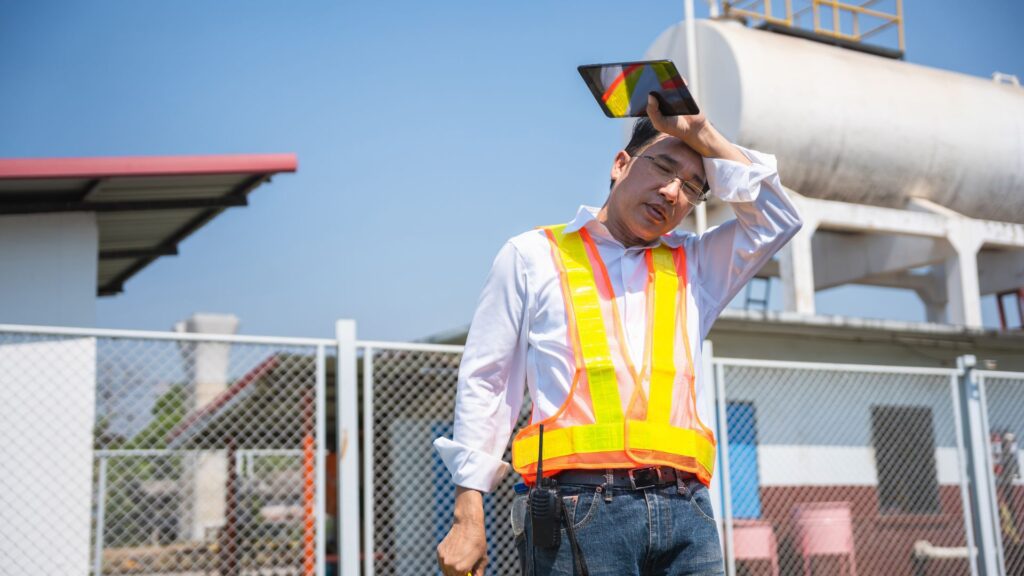
Singapore’s workplaces are getting hotter, literally. In 2025, 29 high-heat-stress days were recorded across Singapore based on Wet Bulb Globe Temperature (WBGT) monitoring, up from 21 in 2024. And with Singapore’s inter-monsoon period running from late March through May, bringing peak afternoon heat, the risk to outdoor and physically demanding workers is at its highest right now.
The consequences are serious. A new study by Singapore researchers found that every 1°C rise in daily average temperature more than doubles an outdoor worker’s risk of heat stroke. If that temperature increase is sustained over three days, the worker’s odds of suffering a heat injury nearly quadruple.
For Singapore employers, heat stress is not just a welfare concern, it is a legal obligation under the Workplace Safety and Health Act. This guide by AnjouHealth explains what heat stress is, who is most at risk, what MOM requires employers to do, and the practical steps every business should take to protect their workers this season and beyond.
In This Guide
- What is heat stress, and why is it getting worse in Singapore
- Recent news: what the WSHC and MOM are saying in 2026
- Who is most at risk
- Heat-related illnesses, from mild to life-threatening
- What MOM requires employers to do? The WBGT framework explained
- Practical heat stress prevention measures for Singapore workplaces
- What to do in a heat stroke emergency
- Employer reporting obligations under the WSH Act
- How heat stress connects to your Risk Management Plan and bizSAFE
- Frequently asked questions
What Is Heat Stress and Why Is It Getting Worse?
Heat stress occurs when the body is unable to dissipate excess heat fast enough to maintain a safe core temperature. In Singapore’s hot and humid climate, this process is made harder by high humidity, which reduces the effectiveness of sweating as a cooling mechanism.
Workers performing physically demanding tasks outdoors are at the greatest risk, but heat stress is not limited to outdoor environments. Workers in poorly ventilated indoor spaces like kitchens, factories, warehouses, and process plants face similar risks.
Singapore’s climate is making the problem worse over time. Singapore’s average temperature in 2025 was 28.1°C, with heat stress readings shattering records. The WGBT reached 35°C at Sentosa on 31 October, and November saw the highest-ever November temperature of 36°C recorded at Newton. With Singapore designating 2026 as the Year of Climate Adaptation, heat resilience has moved firmly onto the national agenda, including in the workplace.
What the WSHC and MOM Are Saying in 2026
The Workplace Safety and Health Council issued a formal advisory in March 2026, urging companies to strengthen workplace preparedness for heat stress as Singapore enters the inter-monsoon hot season.
The WSHC urges employers and supervisors to integrate heat stress management into their overall WSH management framework and ensure heat stress measures are in place to protect workers, including conducting heat risk assessments and monitoring WBGT levels to guide appropriate measures.
This is not a new recommendation, but the urgency has increased. The WSHC’s advisory came alongside data showing that high heat stress days are increasing year on year, and a Duke-NUS study published in March 2026 provided the first local quantification of heat injury cases among outdoor workers.
Of the roughly 40 cases reported to MOM between 2009 and 2023, about 85 per cent involved more severe illnesses such as heat stroke and heat exhaustion. Most cases involved workers from the construction sector, with more than two-thirds being foreign workers.
Researchers note that actual case numbers are likely higher due to under-reporting, particularly for milder heat injuries such as heat cramps, where workers may not seek medical attention.
Who Is Most at Risk

While all outdoor workers face heat stress risk, certain groups are significantly more vulnerable:
By work type:
- Construction workers performing heavy physical labour outdoors
- Marine and shipyard workers
- Process industry workers in hot environments
- Logistics and delivery workers spending extended time outdoors
- Landscaping and horticultural workers
- Road maintenance and cleaning crews
By personal factors, workers who are:
- Older workers above 65 years old
- Pregnant workers
- Overweight or obese workers
- Newly assigned to outdoor work or unaccustomed to Singapore’s heat
- Returning from leave of more than one week
- Currently unwell or recovering from illness
- Managing chronic health conditions or taking certain medications
- With a history of prior heat injury
Employers have a specific duty to identify vulnerable workers and make appropriate redeployment or monitoring arrangements.
Heat-Related Illnesses: From Mild to Life-Threatening
Heat stress exists on a spectrum. Understanding the progression helps employers and supervisors recognise warning signs early:
| Condition | Symptoms | Severity |
| Heat cramps | Painful muscle cramps, usually in the legs or abdomen | Mild |
| Heat syncope | Fainting or dizziness, particularly when standing | Mild to moderate |
| Heat exhaustion | Heavy sweating, weakness, cold/pale/clammy skin, fast/weak pulse, nausea | Moderate |
| Heat stroke | High body temperature (above 40°C), hot/red/dry skin, rapid/strong pulse, confusion, loss of consciousness | Severe medical emergency |
Heat stroke is a life-threatening emergency. Without immediate treatment, it can rapidly damage the brain, heart, kidneys, and muscles. If you suspect a worker is experiencing heat stroke, call 995 immediately.
What MOM Requires Employers to Do? The WBGT Framework
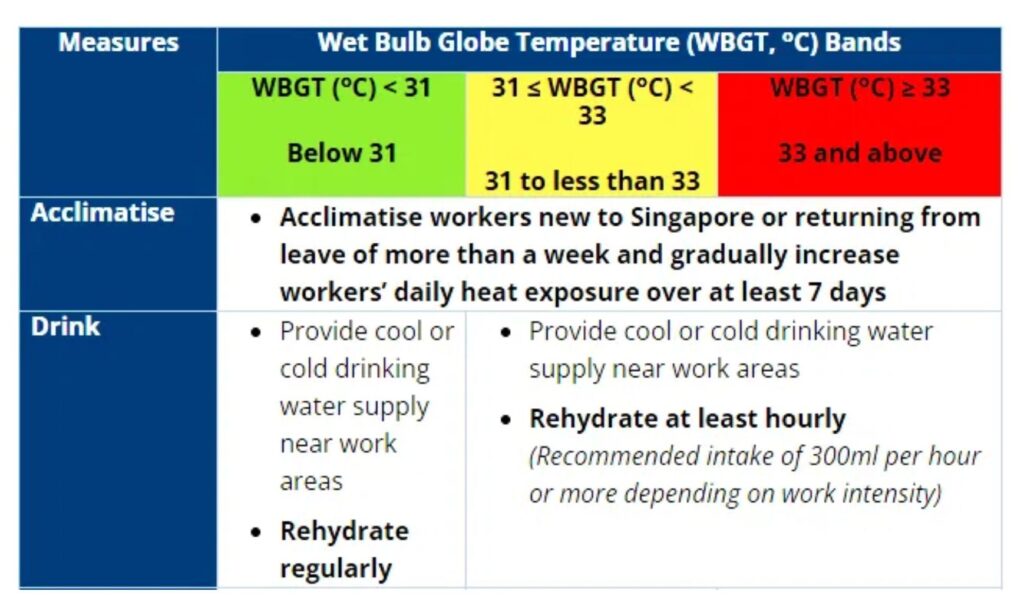
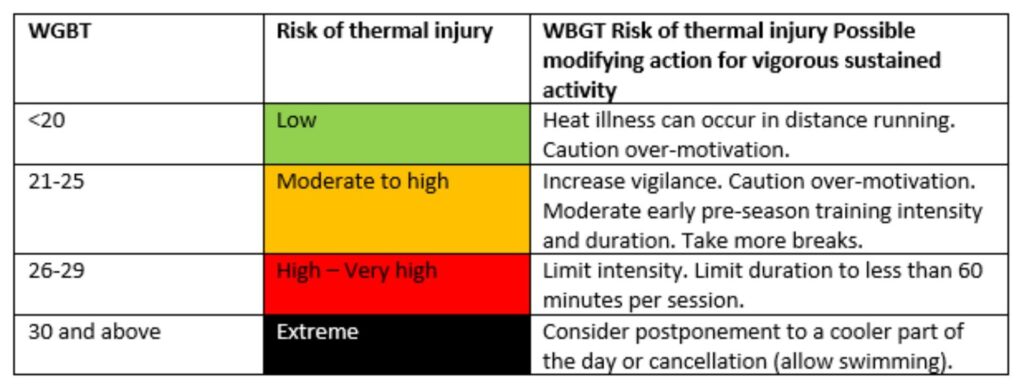
Under the WSH Act, employers and occupiers must assess whether outdoor work can be carried out safely and implement an effective heat stress management programme. MOM’s requirements are structured around the Wet Bulb Globe Temperature (WBGT), a measure that accounts for temperature, humidity, wind speed, and radiant heat.
Employers must implement measures across four key areas (Acclimatise, Drink, Rest, and Shade) with requirements escalating as WBGT rises:
WBGT below 31°C: Baseline requirements
- Acclimatise workers new to Singapore or returning from leave of more than one week, gradually increase heat exposure over at least 7 days
- Monitor WBGT every hour during work hours (on-site WBGT meters required for construction sites with a contract sum of $5 million or more, shipyards, and process industry; other workplaces may use the NEA myENV app)
- Ensure workers rehydrate regularly with cool or cold drinking water provided near work areas
- Ensure workers get adequate rest under shade
- Establish an emergency response plan
WBGT 31°C to less than 33°C: Heightened requirements
- All baseline requirements apply
- Ensure workers rehydrate at least hourly with a minimum of 300ml per hour
- Provide hourly rest breaks of at least 10 minutes for heavy physical work when WBGT reaches 32°C and above
- Reschedule outdoor physical work to cooler parts of the day where feasible
- Implement a buddy system where workers should look out for each other for signs of heat-related illness
- Closely monitor vulnerable workers
- Provide fans or air coolers in rest areas
- Provide loose-fitting, light-coloured clothing
WBGT 33°C and above: Maximum requirements
- All the above requirements apply
- Provide hourly rest breaks of at least 15 minutes for heavy physical work, with longer rest periods as WBGT continues to rise
- Redeploy vulnerable workers to non-outdoor roles
- Standby cold water, ice packs, water spray, and cooler boxes for emergencies on site
Practical Heat Stress Prevention Measures
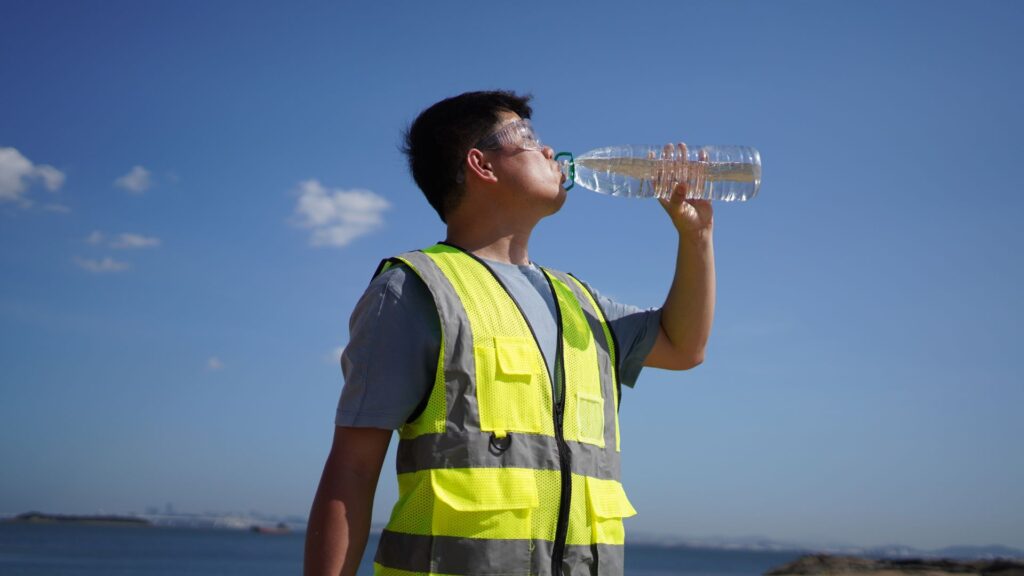
Beyond the mandatory requirements, here are practical measures that Singapore employers should implement as part of a robust heat stress management programme:
Before work begins
- Conduct a heat risk assessment covering all outdoor and physically demanding work activities, document this in your Risk Management Plan
- Brief supervisors and workers on heat stress risks, symptoms to watch for, and emergency procedures at the start of each shift
- Check the WBGT forecast for the day and brief supervisors on the relevant control measures
During work
- Monitor WBGT hourly and adjust work-rest schedules accordingly
- Remind workers to drink regularly, do not wait until they feel thirsty
- Rotate workers between high-exertion tasks and lighter duties to reduce sustained heat exposure
- Ensure shade is accessible near all work areas, not just at a central rest point
- Watch for early warning signs of heat stress in colleagues (dizziness, excessive sweating, pale skin, or confusion)
Worker acclimatisation
- New workers and those returning from leave of more than one week must go through a 7-day acclimatisation process, gradually increasing daily heat exposure
- Do not assign new workers to the heaviest tasks in the first week
Administrative controls
- Schedule the most physically demanding outdoor tasks for the cooler, early morning hours
- Avoid scheduling heavy work between 12pm and 3pm when the heat is typically at its peak
- Ensure a buddy system is in place for all outdoor workers
What to Do in a Heat Stroke Emergency
Heat stroke requires immediate emergency response. Every supervisor and team leader working with outdoor workers should know these steps:
- Call 995 immediately, heat stroke is a medical emergency
- Move the worker to a cool, shaded area immediately
- Remove excess clothing
- Cool the worker as rapidly as possible, apply ice packs under the armpits and groin, use wet cloths, or spray with cool water
- Fan the worker to enhance cooling
- Do not give fluids to an unconscious worker
- Stay with the worker until the ambulance arrives and brief the paramedics on what happened
Do not attempt to drive the worker to the hospital, call for an ambulance and begin cooling immediately.
Employer Reporting Obligations
Under the WSH (Incident Reporting) Regulations, heat-related illnesses are classified as “diseases caused by excessive heat” and are reportable to MOM. Employers must report any suspected case of heat-related illness to MOM within 10 days of the worker being diagnosed by a medical doctor.
Failure to report is an offence. MOM has increased random audits in 2026, specifically targeting under-reporting of workplace incidents, including heat-related cases. If you suspect a worker has suffered a heat-related illness, seek medical attention promptly and do not delay reporting.
How Heat Stress Connects to Your Risk Management Plan and bizSAFE
For companies pursuing or maintaining BizSAFE certification, heat stress must be included in your Risk Management Plan. Under the WSH (Risk Management) Regulations, employers must identify and assess all foreseeable hazards, and for any workplace with outdoor or physically demanding work, heat stress is a foreseeable hazard.
Your Risk Management Plan should document:
- The heat stress hazard and its associated risks
- The WBGT monitoring process and frequency
- Control measures in place (acclimatisation, hydration, rest breaks, shade)
- Vulnerable worker identification and management procedures
- Emergency response procedures for heat-related illness
- Training records showing workers have been briefed on heat stress risks
A heat stress risk assessment that is specific to your workplace and work activities, not a generic template, will strengthen your BizSAFE Level 3 audit position and demonstrate that your Risk Management Plan reflects real operational conditions.
Looking to Strengthen Your Workplace Safety Culture?
Heat stress management is one part of a comprehensive workplace safety programme. At AnjouHealth, we are a trusted workplace health and safety partner in Singapore, with over 1,200 professionals trained and a client satisfaction rate exceeding 95%. We help businesses build lasting WSH cultures through evidence-based programmes that engage employees at every level.
- Workplace Safety Campaigns
Interactive, hands-on campaigns that embed safety awareness, including heat stress prevention, across your entire workforce - Workplace Ergonomics Risk Assessment (WERA)
Identify physical risk factors, including heat exposure, that feed directly into your Risk Management Plan - Occupational Health Programmes
On-site health screenings that identify workers with underlying conditions that increase heat stress vulnerability - Customised WSH Solutions
Tailored programmes built around your industry, workforce size, and specific risk profile
Frequently Asked Questions
- Is heat stress management legally required for all Singapore employers?
Yes. Under the WSH Act, all employers and occupiers have a duty to ensure workplaces are safe and free from health risks. For workplaces with outdoor or physically demanding work, heat stress management is a specific requirement. MOM’s mandatory heat stress measures apply to all outdoor workplaces, with escalating requirements based on WBGT readings.
- Do indoor workplaces need to manage heat stress too?
Yes. While MOM’s specific WBGT framework focuses on outdoor work, the WSH Act applies to all workplaces. Workers in poorly ventilated indoor environments like kitchens, factories, warehouses, and process plants can also experience heat stress, and employers have a duty to assess and manage this risk.
- What is WBGT, and how do I monitor it?
WBGT stands for Wet Bulb Globe Temperature, a measure that accounts for temperature, humidity, wind speed, and radiant heat. For construction sites with a contract sum of $5 million or more, shipyards, and the process industry, on-site WBGT meters are mandatory. Other workplaces can use the NEA myENV app to monitor WBGT readings.
- How do I acclimatise a new worker to Singapore’s heat?
Gradually increase the worker’s daily heat exposure over at least 7 days. In the first few days, limit outdoor work to the cooler morning hours and assign lighter tasks. Progressively increase the duration and intensity of outdoor work as the worker adapts. Monitor their condition closely throughout the acclimatisation period.
- What must I report to MOM if a worker suffers a heat-related illness?
Heat-related illnesses are classified as “diseases caused by excessive heat” and must be reported to MOM within 10 days of medical diagnosis. This applies to heat stroke, heat exhaustion, and other heat-related conditions. Reports are submitted through MOM’s iReport system.
- Does heat stress need to be included in my BizSAFE Risk Management Plan?
Yes. For any workplace with outdoor or physically demanding work, heat stress is a foreseeable hazard that must be identified, assessed, and addressed in your Risk Management Plan. Your Level 3 auditor will review whether your plan reflects real workplace conditions, a generic plan that does not include heat stress for an outdoor workforce will not pass.
Read Next
- bizSAFE Singapore: The Complete Guide — All Levels Explained
- bizSAFE Level 3 Singapore: Requirements & Certification Guide
- Workplace Safety Compliance Singapore: What Employers Must Do to Meet WSH Requirements
- How to Identify Workplace Hazards in Singapore: A Practical Guide for Employers
- Occupational Health and Safety Programme Singapore: A Practical Guide for Employers