


Written by
Wesley Chee, Physiotherapist & Ergonomist at AnjouHealth
Wesley Chee is a Physiotherapist and Ergonomist contributing to AnjouHealth’s workplace health and safety programmes. He is also the Director and Chief Sports Physiotherapist at Physio & Sole Clinic, holding a Master of Musculoskeletal and Sports Physiotherapy from the University of South Australia. With over 15 years of clinical experience in sports and musculoskeletal injuries, Wesley brings hands-on expertise in workplace ergonomics, injury prevention, and employee well-being to every programme he is involved in.
Overview
Ergonomic hazards rarely announce themselves. Unlike a chemical spill or a fall from height, ergonomic risks build quietly through repetitive movements, awkward postures, sustained force, and prolonged exposure. By the time an employee reports pain or discomfort, the damage is often already underway.
For Singapore employers, this is not just a welfare issue. Under the Workplace Safety and Health Act, employers are required to identify and manage all foreseeable workplace hazards, and ergonomic risks are explicitly included. A Workplace Ergonomics Risk Assessment (WERA) is the structured process that helps you do exactly that.
This guide by AnjouHealth explains what a WERA involves, which workplaces and industries need one, what the process looks like step by step, and what you should do with the results.
In This Guide
- What is a Workplace Ergonomics Risk Assessment
- Why ergonomic risks matter — the cost to your business
- Which workplaces and industries need a WERA
- What the WERA process involves — step by step
- What is assessed during a WERA
- What you receive after the assessment
- How WERA connects to WSH compliance and bizSAFE
- How AnjouHealth conducts Workplace Ergonomics Risk Assessments
- Frequently asked questions
What Is a Workplace Ergonomics Risk Assessment?
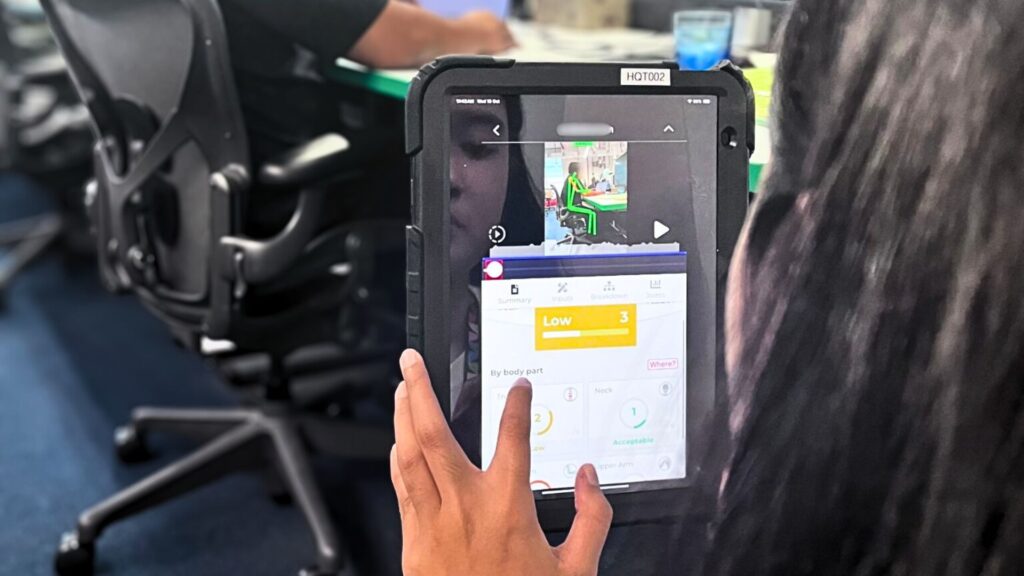
A Workplace Ergonomics Risk Assessment is a systematic evaluation of the physical demands placed on workers during their daily tasks with the goal of identifying ergonomic risk factors that could lead to Work-Related Musculoskeletal Disorders (WMSDs).
The assessment examines how employees move, what postures they adopt, how much force they exert, how often they repeat certain actions, and how long they are exposed to these demands. Using structured assessment tools, trained assessors quantify the level of ergonomic risk associated with each task and identify which workers, roles, and workstations require immediate intervention.
The outcome is not a compliance document, it is a practical, actionable roadmap for reducing injury risk, improving productivity, and protecting your workforce.
Why Ergonomic Risks Matter — The Cost to Your Business

Many Singapore employers underestimate ergonomic risks because the consequences are gradual rather than immediate. But the data tells a different story. Work-related musculoskeletal disorders are consistently among the leading causes of work injury claims in Singapore, affecting employees across office, industrial, and operational environments.
The business cost is high:
- Lost productivity
Employees experiencing musculoskeletal pain are less efficient and more prone to errors, even before they take medical leave
- Absenteeism
WMSDs are a leading cause of prolonged medical leave and repeated short absences
- Compensation claims
Under the Work Injury Compensation Act (WICA), employers are liable for work-related musculoskeletal injuries, which can result in substantial payouts
- MOM reporting obligations
Musculoskeletal disorders of the upper limb are classified as a reportable occupational disease under the WSH (Incident Reporting) Regulations, meaning employers must report cases to MOM within 10 days of diagnosis
- Reputational impact
A workplace with high injury rates struggles to attract and retain quality talent
A proactive WERA identifies these risks before they cause injuries, making it significantly more cost-effective than responding after the fact.
Which Workplaces and Industries Need a WERA?

Any workplace with physical work demands can benefit from a Workplace Ergonomics Risk Assessment. However, it is particularly important for organisations where employees regularly perform:
- Manual handling tasks
Lifting, carrying, pushing, pulling, or lowering loads
- Repetitive movements
Assembly line work, packing, data entry, or any task involving repeated motions of the same body part
- Sustained or awkward postures
Bending, twisting, reaching overhead, or working in confined positions for extended periods
- Work involving force
Gripping, pressing, or operating tools that require significant physical exertion
- Vibration exposure
Use of power tools, heavy machinery, or vehicles
Industries with the highest ergonomic risk profiles in Singapore include:
| Industry | Common Ergonomic Risks |
| Logistics and Warehousing | Manual handling, repetitive lifting, prolonged standing |
| Manufacturing and Production | Assembly line repetition, sustained awkward postures, vibration |
| Construction | Work at height, heavy lifting, sustained bending and reaching |
| Healthcare and Eldercare | Patient handling, prolonged standing, sustained awkward postures |
| Office and Professional Services | Prolonged sitting, poor workstation setup, repetitive keyboard and mouse use |
| Food and Beverage | Repetitive chopping and preparation tasks, prolonged standing on hard surfaces |
| Retail | Prolonged standing, manual handling of stock, awkward reaching |
What the WERA Process Involves: Step by Step
A professional Workplace Ergonomics Risk Assessment follows a structured process. Here is what AnjouHealth’s WERA process looks like:
Step 1: Discovery & Site Walkthrough
The assessment begins with a site visit. Our assessors walk through your facility to understand your environment, map out work roles and tasks, identify the high-risk operations to be assessed, and develop a customised assessment scope tailored to your industry and workforce.
Step 2: Task Observation & Motion Analysis
Assessors observe employees performing their actual work tasks, not staged demonstrations. Real-time motion analysis and video capture are used where appropriate to record movement patterns, postures, and physical demands as they occur on the job.
Step 3: Ergonomic Risk Evaluation
Using recognised ergonomic assessment tools, including REBA (Rapid Entire Body Assessment) and RULA (Rapid Upper Limb Assessment), assessors systematically score each identified risk factor across the body (shoulders, wrists, back, neck, and lower limbs) as well as force, repetition, vibration, contact stress, and task duration. This produces a quantified risk level for each task assessed.
Step 4: Employee Engagement
Ergonomic assessments are most effective when employees are involved. Our process includes group workshops and, where appropriate, individual physiotherapy consultations. Employees are given practical tools to improve their own posture, reduce strain, and flag discomfort early, embedding ergonomic awareness at the ground level.
Step 5: Reporting & Recommendations
You receive a comprehensive, executive-ready report that documents all identified risk factors, their severity levels, and prioritised recommendations for control measures. Recommendations are practical and cost-effective, ranging from simple workstation adjustments such as adding a footstool or repositioning a monitor, to workflow redesign, equipment upgrades, or task rotation schedules.
Step 6: Ongoing Support & Follow-Up
A WERA is not a one-off exercise. AnjouHealth provides follow-up audits, performance monitoring, and continuous programme optimisation to ensure that recommended controls are implemented, sustained, and embedded into your workplace safety culture over time.
What Is Assessed During a WERA?
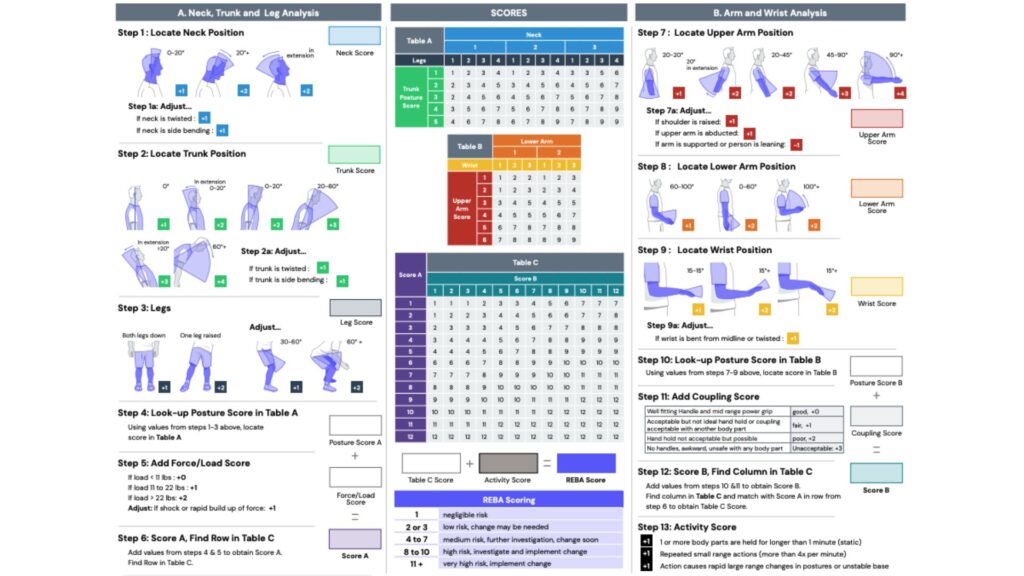
The assessment covers two main areas:
Physical Risk Factors (Part A: Body Areas)
Each of the five key body areas is evaluated for posture, load, and repetition:
- Shoulders: elevation, abduction, reach
- Wrists: flexion, extension, deviation
- Back: flexion, lateral bending, rotation
- Neck: flexion, extension, lateral bending
- Legs and feet: standing duration, posture, foot support
Physical Risk Factors (Part B: Task Demands)
Four additional risk dimensions are assessed across all tasks:
- Force: level of exertion required to perform the task
- Vibration: exposure to hand-arm or whole-body vibration
- Contact stress: pressure exerted on body parts by hard surfaces or edges
- Duration: how long the worker is exposed to each risk factor per shift
Each factor is scored and combined into a final risk level (low, medium, or high), which determines the urgency and nature of recommended interventions.
What You Receive After the Assessment
Following a WERA conducted by AnjouHealth, you receive:
- A comprehensive written report documenting all assessed tasks, risk factor scores, and overall risk levels
- Prioritised recommendations with specific, practical control measures for each identified risk
- Implementation timelines to guide your WSH team in addressing findings systematically
- MOM and WSH compliance documentation that supports your risk management records, bizSAFE audit preparation, and internal governance requirements
- Employee-facing materials from workshops and consultations that can be retained for training records
How WERA Connects to WSH Compliance and bizSAFE
A Workplace Ergonomics Risk Assessment is not separate from your broader WSH compliance obligations; it is a direct part of them.
Under the WSH (Risk Management) Regulations, employers must conduct risk assessments that cover all foreseeable hazards, including ergonomic hazards. A WERA provides the structured documentation of ergonomic hazard identification, risk evaluation, and control measures that your risk management register must include.
For companies pursuing BizSAFE Level 3, the risk assessment register, including ergonomic hazards, is a key document reviewed during the RM Implementation Audit. A well-documented WERA strengthens your audit position and demonstrates that your Risk Management Plan reflects real workplace conditions rather than generic content.
For companies already certified at bizSAFE Level 3 or above, a periodic WERA ensures your risk assessments remain current, especially when work processes, equipment, or workforce composition changes.
How AnjouHealth Conducts Workplace Ergonomics Risk Assessments
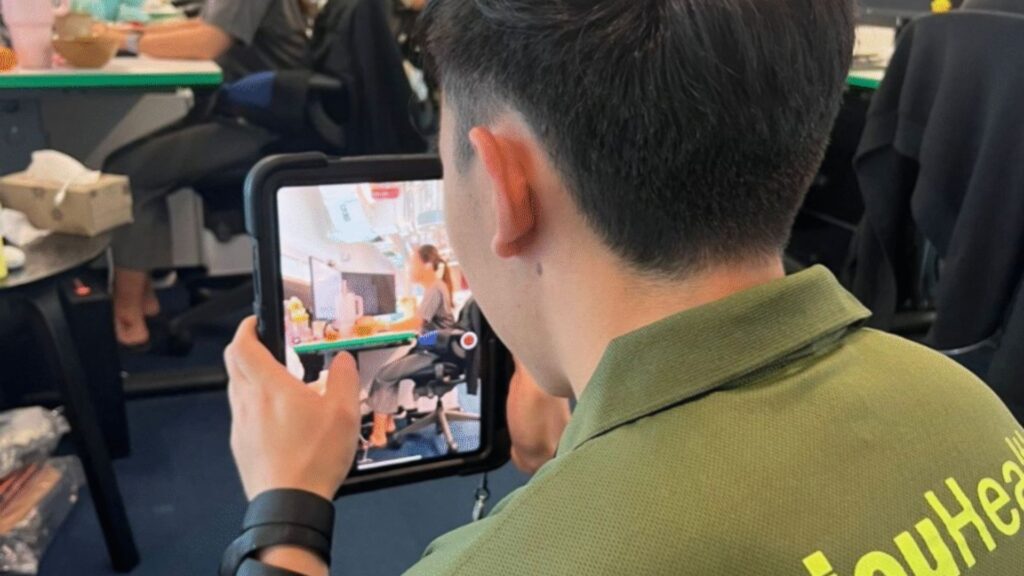
At AnjouHealth, our WERA service is delivered by a team of allied health professionals and WSH specialists with hands-on experience across a wide range of Singapore industries, from logistics and manufacturing to office environments and healthcare.
What sets our approach apart:
- Motion analysis and digital data capture
We use technology to objectively measure and document real employee movements, not just visual estimates
- Recognised assessment methodology
Our assessors apply REBA and RULA tools to ensure results are standardised, defensible, and comparable over time
- Practical, actionable recommendations
Our reports are written for WSH officers, operations managers, and HR teams, not just safety specialists
- Employee-centred delivery
We engage workers directly through workshops and consultations, not just management, ensuring safety improvements are understood and adopted on the ground
- Ongoing partnership
We do not disappear after the report is delivered. Our follow-up support ensures recommendations are implemented and sustained
With over 1,200 professionals trained and a client satisfaction rate exceeding 95%, AnjouHealth has a proven track record of helping Singapore businesses identify ergonomic risks early and build genuinely safer, healthier workplaces.
Ready to Protect Your Team From Ergonomic Injuries?
Ergonomic risks do not wait until they are convenient to address. The longer they go unassessed, the greater the risk of injury, absenteeism, and compliance exposure. At AnjouHealth, our Workplace Ergonomics Risk Assessment gives you the data, documentation, and recommendations you need to act before injuries occur.
Frequently Asked Questions
- Is a Workplace Ergonomics Risk Assessment legally required in Singapore?
Under the WSH Act, employers must assess all foreseeable workplace hazards, including ergonomic hazards. While a standalone WERA is not mandated by name, failing to assess ergonomic risks in workplaces where manual handling, repetitive tasks, or sustained awkward postures are common leaves employers exposed to both legal liability and MOM enforcement action.
- How often should a WERA be conducted?
Under the WSH (Risk Management) Regulations, risk assessments must be reviewed at least once every three years, or whenever there are significant changes to work activities, equipment, workforce, or after a workplace incident. For high-risk operations, more frequent assessments are recommended.
- How long does a WERA take?
The duration depends on the size of your facility, the number of tasks assessed, and the complexity of your operations. A focused assessment for a single department or work area can typically be completed in one to two days. Larger or multi-site assessments take longer and are scoped accordingly.
- Who conducts the WERA?
AnjouHealth’s assessments are conducted by qualified allied health professionals and WSH specialists trained in ergonomic assessment methodology. We use recognised tools, including REBA and RULA methodology, to ensure results are objective and defensible.
- Will the assessment disrupt our operations?
Our assessments are designed to cause minimal disruption. Observations are conducted during normal working hours and workflows. We observe employees doing their actual work rather than requiring them to stop or stage demonstrations.
- Can a WERA help with our bizSAFE audit?
Yes. A documented WERA provides comprehensive coverage of ergonomic hazards as part of your Risk Management Plan, a document your Level 3 auditor will review. It demonstrates that your risk assessments are thorough, workplace-specific, and regularly maintained.
- What is the difference between a WERA and a workstation ergonomics assessment?
A WERA focuses on the physical demands of operational and manual tasks across the broader workplace, particularly in industrial, logistics, and production environments. A workstation ergonomics assessment is more focused on individual desk-based setups in office environments. Both are part of a comprehensive ergonomics programme and often complement each other.
Read Next
- What Is Ergonomic Risk Assessment? A Guide to Workplace Ergonomic Risks in Singapore
- WMSD in Singapore: What Employers Need to Know About Work-Related Musculoskeletal Disorders
- 7 Early Signs of Work-Related Musculoskeletal Disorders (WMSD) in the Workplace
- Workstation Ergonomics Assessment in Singapore: When It’s Needed and What to Expect
- Workplace Ergonomics in Singapore: A Practical Guide for Safer, Healthier Offices