

Written by
Bryan Sim, Business Development at AnjouHealth
An OHS programme developer at AnjouHealth focused on designing workplace health and safety initiatives that help organisations create safer, healthier, and more engaged environments. He works on translating ergonomic assessments and workplace risk insights into practical initiatives such as safety campaigns, wellbeing programmes, and workplace interventions that are impactful, sustainable, and aligned with operational needs.
Overview
“Do we need a WSH Officer, or is a Safety Coordinator enough?”
It’s one of the most common questions Singapore employers ask when setting up their workplace safety structure, and getting it wrong has real consequences. Appoint the wrong role, or no role at all, and you risk falling short of MOM requirements during an inspection or bizSAFE audit.
The confusion is understandable. Both roles sit under the umbrella of workplace safety and health (WSH), both interact with risk assessments and safe work procedures, and job listings often use the titles loosely. But under Singapore’s WSH framework, a Workplace Safety and Health Officer (WSHO) and a Workplace Safety and Health Coordinator (WSHC) are distinct roles, with different legal requirements, qualifications, and scopes of responsibility.
This guide breaks down exactly what separates the two roles, when each is legally required, and how to determine which one your organisation needs.
In This Guide
- What is a WSH Officer (WSHO)
- What is a Safety Coordinator (WSHC)
- Key differences at a glance
- When is a WSH Officer legally required
- When is a Safety Coordinator required
- Qualifications and registration requirements
- Can one person hold both roles
- How these roles fit into your bizSAFE journey
- Frequently asked questions
What Is a WSH Officer (WSHO)?
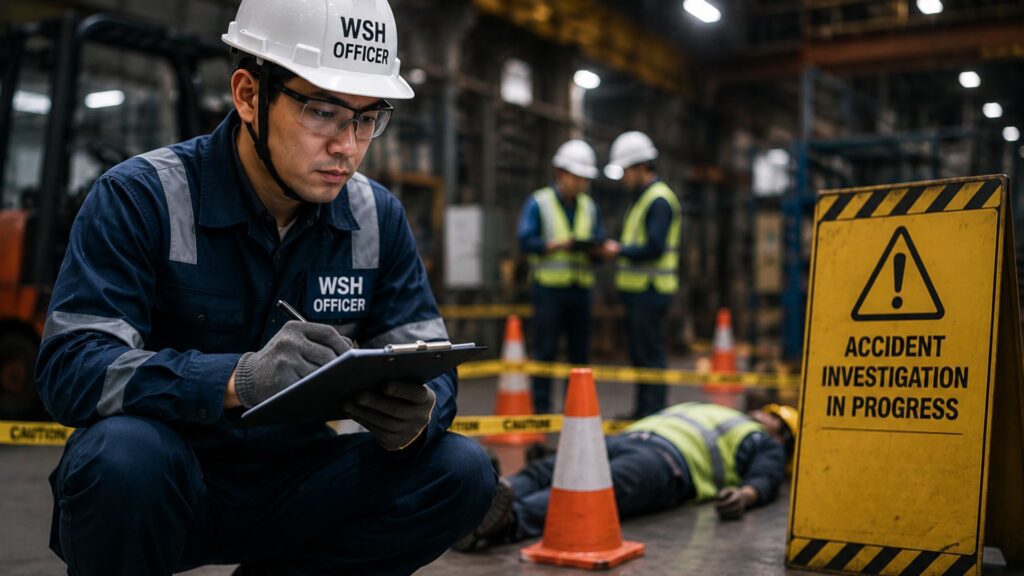
A Workplace Safety and Health Officer is a person registered with the Ministry of Manpower (MOM) under the Workplace Safety and Health (Workplace Safety and Health Officers) Regulations. The WSHO is appointed by the employer to advise on, implement, and oversee the workplace’s safety and health management system.
The WSHO’s responsibilities are broad and typically include:
- Conducting workplace inspections and risk assessments
- Developing, implementing, and maintaining the safety management system
- Investigating accidents, incidents, and near misses, and identifying root causes
- Advising management on WSH legal requirements and applicable codes of practice
- Preparing the workplace for MOM inspections and audits, and following up on enforcement notices
- Maintaining WSH documentation, including risk assessments, safe work procedures, and training records
- Acting as the primary point of contact with MOM on safety and health matters
Given this scope, a WSHO is expected to have a working knowledge of the entire safety management system, not just individual safety tasks, and to represent the organisation in dealings with regulators.
What Is a Safety Coordinator (WSHC)?

A Workplace Safety and Health Coordinator is appointed to support the coordination and implementation of safety initiatives at a worksite, particularly on construction projects that fall below the threshold requiring a WSHO.
The WSHC’s role is more operational and day-to-day in nature, typically including:
- Coordinating daily safety activities on site, such as toolbox meetings and inspections
- Helping implement the safe work procedures and risk management plan developed for the site
- Liaising between workers, supervisors, and the safety team on day-to-day safety matters
- Supporting documentation of safety briefings, inspections, and incidents
- Assisting with housekeeping, signage, and PPE compliance checks
A WSHC works within the framework set by the company’s safety management system, rather than being responsible for developing and overseeing that system. In practice, a WSHC often works under the guidance of a WSHO, a safety consultant, or company management, depending on the size and risk profile of the worksite.
Key Differences at a Glance
| WSH Officer (WSHO) | Safety Coordinator (WSHC) | |
| Registration | Registered with MOM | Not a MOM-registered role |
| Scope | Oversees the full safety management system | Coordinates day-to-day safety activities on site |
| Typical responsibilities | Risk assessments, SMS development, incident investigation, MOM liaison, and audits | Toolbox meetings, daily inspections, documentation support, and PPE checks |
| Authority | Can advise management and represent the company to MOM | Operates within the existing safety framework |
| When required | Higher-risk or larger workplaces meeting specific MOM thresholds | Smaller construction projects below the WSHO threshold |
| Training depth | More extensive, WSH Officer course and MOM registration | Lighter-touch, site-level safety coordination training |
When Is a WSH Officer Legally Required?

Under the Workplace Safety and Health (Workplace Safety and Health Officers) Regulations, employers are required to appoint a registered WSHO for certain categories of workplaces, including:
- Shipyards where vessels are constructed, reconstructed, repaired, refitted, or broken up
- Factories that process petroleum or petroleum products
- Factories or worksites carrying out building operations or works of engineering construction with a contract sum of S$10 million or more
- Factories with 100 or more employees
If your organisation falls into any of these categories, a registered WSHO is a legal requirement, not an optional safety hire. Employers should confirm their specific obligations against the current regulations or consult MOM directly, as thresholds and categories can be updated over time.
When Is a Safety Coordinator Required?
A Safety Coordinator is generally appointed for worksites that do not meet the WSHO appointment threshold, most commonly, construction projects with a contract sum below S$10 million.
For these smaller projects, a WSHC provides day-to-day safety coordination on site without the full scope (or cost) of a registered WSHO. This allows smaller contractors to maintain a visible safety presence on site and support the implementation of safe work procedures, while the broader safety management system may be developed and overseen by a consultant, the main contractor’s WSHO, or company management.
It’s worth noting that even where a WSHC is sufficient to meet the legal minimum, many organisations choose to engage a WSHO or external WSH consultancy anyway. Particularly if they are pursuing bizSAFE certification, working on contracts with larger principals who require higher safety standards, or operating in industries with elevated injury rates.
Qualifications and Registration Requirements
WSH Officer
To become a registered WSHO, a person generally needs to:
- Be at least 21 years old
- Hold at least a diploma or higher qualification from a recognised institution
- Have relevant work experience (commonly cited as a minimum of around 2 years involving safety, operations, or technical work)
- Apply for and obtain registration with MOM as a WSHO
WSHO registration is not permanent, officers are required to maintain their competency through continuing education, including submission of Sustained Development Units (SDUs), and registration is subject to renewal.
Safety Coordinator
There is no MOM registration process for the WSHC role itself. Requirements are typically set by the employer, the main contractor, or the specific project’s safety management system, and may include relevant safety coordination training courses. Because the role does not carry the same regulatory registration, requirements can vary more between organisations and projects.
Can One Person Hold Both Roles?
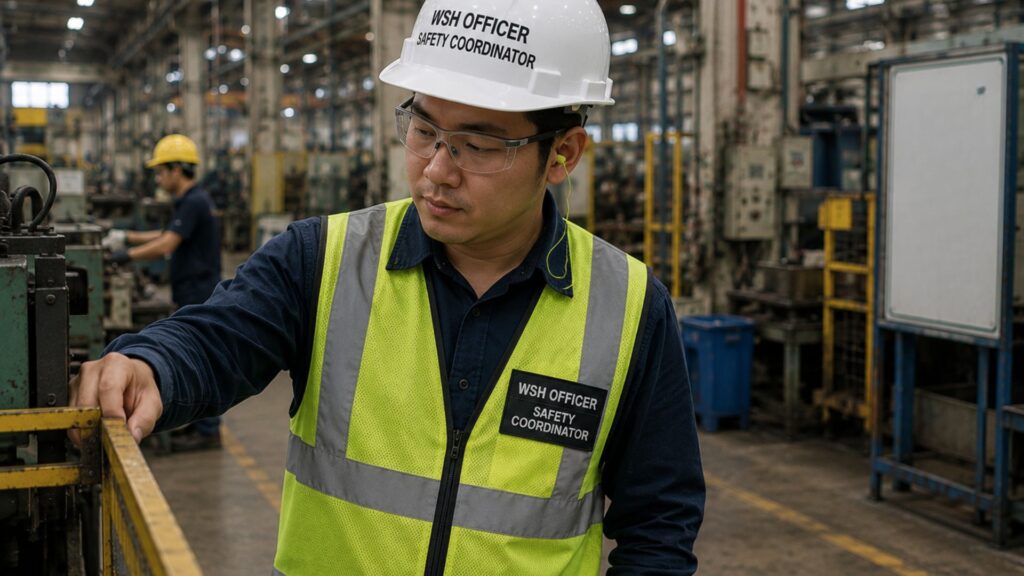
In smaller organisations, it’s common for a single safety professional to take on responsibilities that span both roles, particularly where the organisation does not meet the WSHO appointment threshold but still wants a higher level of safety oversight than a basic coordinator role would provide.
However, where a WSHO is legally required, that role must be filled by a person who meets the MOM registration requirements. A Safety Coordinator without WSHO registration cannot substitute for a legally required WSHO, even if they are performing similar day-to-day tasks. Employers should be careful not to conflate the two when assessing whether they meet their statutory obligations.
How These Roles Fit Into Your bizSAFE Journey
For organisations pursuing bizSAFE certification, both roles can play a part in demonstrating that your Risk Management Plan is being implemented on the ground:
- A WSHO typically leads the development of the Risk Management Plan, oversees the safety management system, and is a key point of contact during bizSAFE audits — particularly for Level 3 and above.
- A Safety Coordinator supports the day-to-day implementation of that plan — running toolbox meetings, conducting routine inspections, and maintaining the records that show the plan is being followed in practice.
Auditors look for evidence that safety responsibilities are clearly assigned and that the people in these roles understand what is expected of them. Having clarity on who holds which role — and ensuring they are appropriately qualified for it, is part of demonstrating a functioning safety management system, not just a documented one.
Strengthening Your Safety Structure Beyond Job Titles
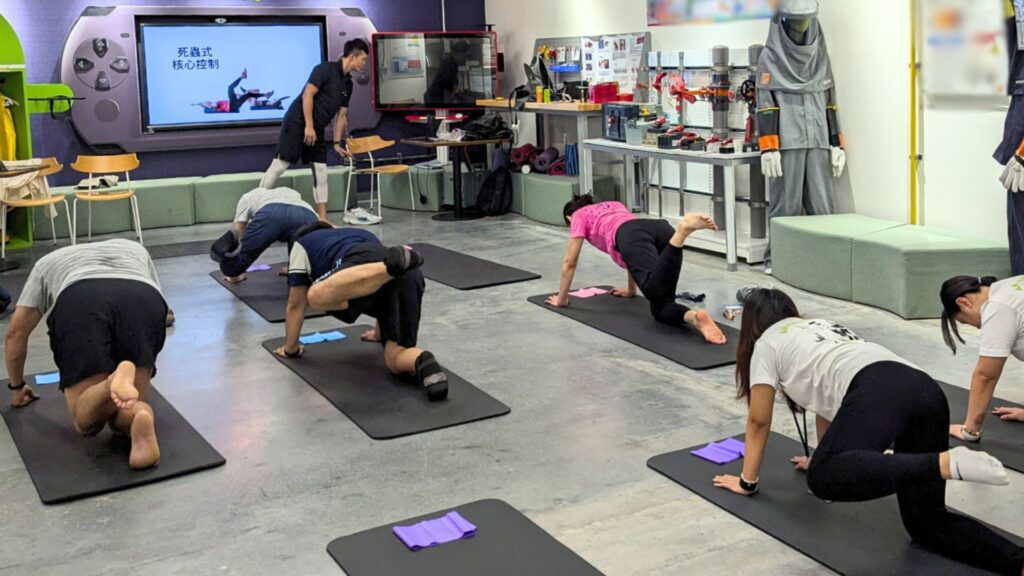
Whether your organisation is led by a WSHO, supported by a Safety Coordinator, or both, the effectiveness of these roles depends on the programmes and culture around them. At AnjouHealth, we help businesses build the practical safety initiatives that support your WSH officers and coordinators on the ground:
- Workplace Safety Campaigns
Interactive programmes that reinforce daily safety messaging across your workforce
- Workplace Ergonomics Risk Assessment (WERA)
Identify ergonomic hazards to feed into your Risk Management Plan and toolbox meeting topics
- Occupational Health Programmes
Onsite health screenings and wellness initiatives that complement day-to-day safety practices
- Injury Rehabilitation & Return to Work
Structured support when an injury does occur, working alongside your safety team
Frequently Asked Questions
- Is a Safety Coordinator the same as a WSH Officer?
No. A WSH Officer (WSHO) is registered with MOM and oversees the full safety management system, including risk assessments, incident investigations, and liaison with MOM. A Safety Coordinator (WSHC) supports day-to-day safety coordination on site, typically on smaller construction projects, and is not a MOM-registered role.
- Does every company need to appoint a WSH Officer?
No. The requirement to appoint a registered WSHO applies to specific categories of workplaces, such as shipyards, petroleum-processing factories, larger construction projects, and factories above a certain employee count. Companies that do not fall into these categories may not be legally required to appoint a WSHO, though many choose to do so voluntarily.
- Can a Safety Coordinator fulfil a company’s WSHO requirement?
No. Where a WSHO is legally required, the role must be filled by someone registered with MOM as a WSHO. A Safety Coordinator, regardless of experience, cannot substitute for this registration requirement.
- Which role is more relevant for bizSAFE certification?
Both can be relevant depending on your bizSAFE level and organisation size. A WSHO often plays a leading role in developing and overseeing the Risk Management Plan, particularly for Level 3 and above, while a Safety Coordinator supports its day-to-day implementation and documentation on site.
- How do I know which one my company needs?
This depends on your industry, workforce size, and (for construction) the contract sum of your projects. Employers should check their obligations against the current Workplace Safety and Health (Workplace Safety and Health Officers) Regulations or consult MOM or a qualified WSH professional to confirm what applies to their specific situation.
Read Next
- Workplace Safety Officer Singapore: Roles, Duties & How to Become One
- Toolbox Meetings Singapore: A Complete Guide for Employers (2026)
- bizSAFE Singapore: The Complete Guide, All Levels Explained
- WSH Risk Assessment Singapore: A Practical Guide
- Workplace Safety Compliance Singapore: What Employers Must Do