


Quick Summary
The question usually gets asked backwards. Someone decides the company needs "a safety person," hires or designates one, and only later discovers that a single hire can't run a REBA-scored risk assessment, conduct an audiometric test, or design a return-to-work plan: those need specific methods, equipment, or qualifications that one generalist role was never going to cover alone. The better question isn't in-house or outsourced. It's which parts of workplace safety and health actually need someone on staff every day, and which parts need a specialist for a defined piece of work.
What does "in-house" actually mean in practice?
A person on your payroll, physically present, who owns safety day to day. That's a Workplace Safety Officer (WSHO) or WSH Coordinator (WSHC), a role with its own registration and legal requirements, which we've covered in detail elsewhere and won't repeat here. What matters for this post is what that role is structurally suited for: ongoing presence, daily supervision, being the person who notices when a guard rail is missing, or a walkway is blocked, and holding institutional knowledge of how your specific site actually operates.
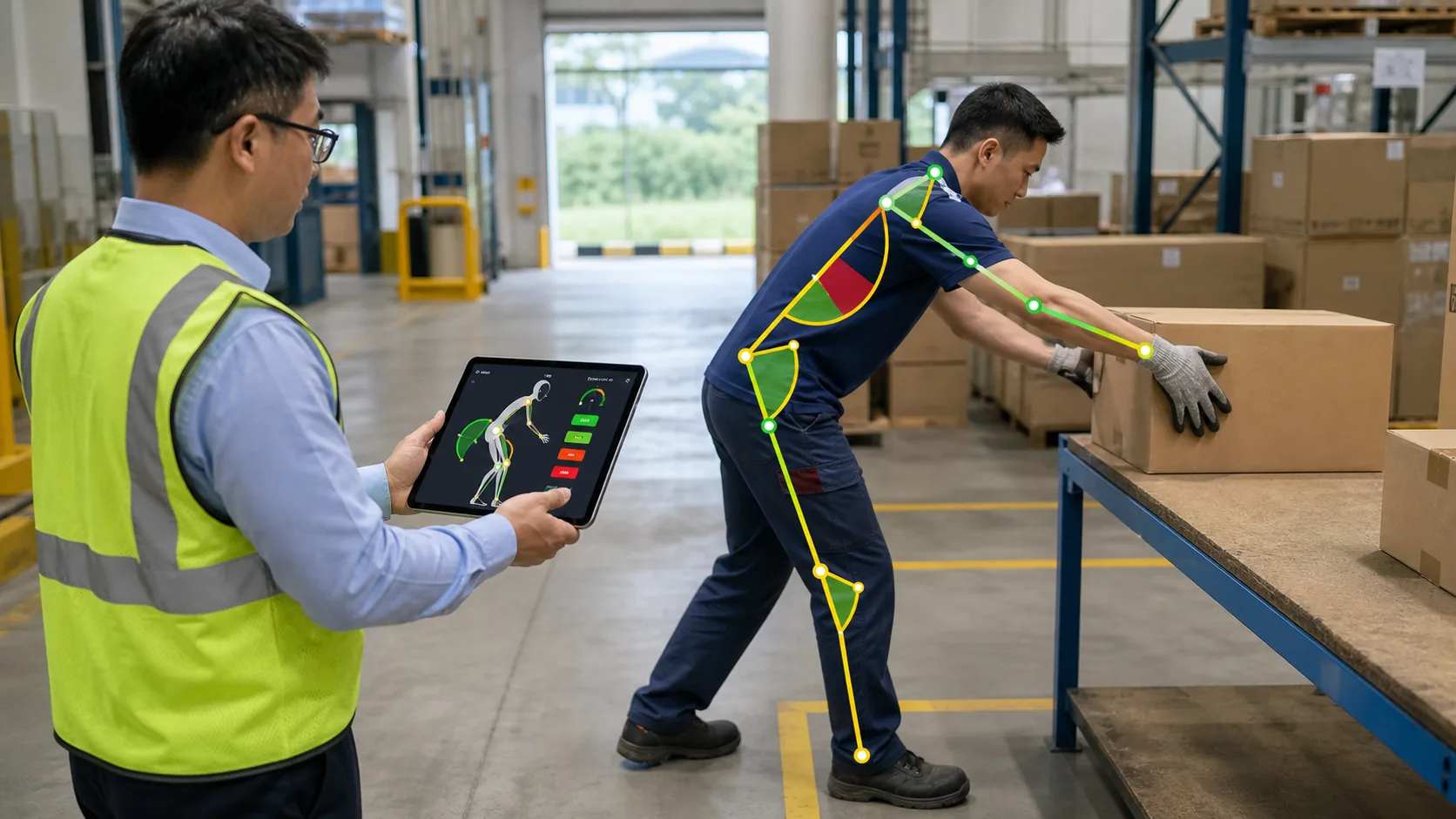
What it isn't automatically suited for is every technical assessment your WSH programme might need. A WSHO can run a risk assessment. They typically cannot, on their own, conduct a REBA or RULA ergonomics scoring, perform a statutory medical examination (that requires a Designated Workplace Doctor specifically), or build a multi-week workstation intervention programme with physiotherapy built in. Those need tools, training or registrations that sit outside most in-house safety roles, not because the person isn't capable, but because they're a different specialism.
What does "outsourced" actually mean in practice?
Bringing in a specialist for a defined scope of work, once or on a recurring basis. This isn't a fringe workaround: the WSH Council runs its own formal version of it. Total Workplace Safety and Health (Total WSH) is a WSH Council approach that pairs companies with external Total WSH Service Providers to identify workplace risks, design and run intervention programmes, and monitor the results. Sign-up is free, subject to terms and conditions. Whatever position a company takes on outsourcing specialist WSH work, the regulator's own programme is built on doing exactly that for the pieces that need it.
In practice, outsourcing covers the technical, tool-dependent or periodic work: ergonomic risk assessments using validated scoring methods, workstation programmes with video analysis, statutory medical examinations by a Designated Workplace Doctor, onsite physiotherapy, and safety campaigns that need specialist facilitation rather than a generalist running through slides.

The honest case for building it in-house
Ongoing presence is a role, not a visit. This is the part outsourcing structurally cannot replace: if your site needs someone who notices a problem the moment it appears, that has to be a person who is there every day. A specialist provider, however good, can only visit. They can't supervise a site they aren't on.
Beyond that, some workplaces are legally required to appoint a WSHO, and once that appointment is required, it's required regardless of whether you also bring in outside help for specific technical work. We've covered when a Workplace Safety Officer is legally required and how a WSHO differs from a WSH Coordinator elsewhere, worth reading if the appointment question itself, rather than the outsourcing question, is what you're trying to answer.
There's also a genuine institutional-knowledge argument: someone who works at your site every day accumulates a working understanding of it that a periodic visitor has to rebuild each time. For companies with complex, constantly-changing operations, that continuity has real value.
The honest case for bringing in a specialist
Some work needs a method, a tool or a qualification that one generalist role doesn't hold. REBA and RULA ergonomics scoring, audiometric testing, statutory medical examinations requiring a Designated Workplace Doctor, multi-week workstation intervention programmes with physiotherapy: these aren't things most in-house safety roles are equipped to run themselves, and building that capability internally (training, certification, equipment, ongoing practice to stay current) is a real cost that only makes sense at real scale.
For most companies, especially SMEs, the volume of this kind of work doesn't justify hiring or training for it internally. One ergonomic risk assessment a year, or one round of workstation assessments for a desk-based team, is a natural fit for a specialist engagement rather than a permanent hire.
Is it actually either/or?
For most companies, no. The more common structure pairs an internal owner with external specialists for specific technical work. We don't have data on how AnjouHealth's own clients typically split this, so this isn't a claim about what most companies do in practice. But the logic holds up on its own, and it's also how the WSH Council's own Total WSH model is built: an internal safety function handles day-to-day presence and supervision, while a specialist provider is brought in for the assessments, programmes and technical work that need particular methods or equipment.
Framed that way, the real question isn't "in-house or outsourced." It's which pieces of your WSH programme genuinely need someone on-site every day, and which pieces would be better run by someone who does that specific assessment or programme for a living.
Signs it might be time to bring in outside help
There isn't one single trigger that applies to every company, but a few signs tend to show up together.
- Your existing in-house safety resource is stretched across general supervision and technical work they aren't specifically trained for
- A bizSAFE level, a client tender, or an audit requirement calls for a specific assessment (a WERA, an ergonomics programme, an accredited audit) that your team hasn't run before
- You've had a musculoskeletal injury or a near-miss and want a proper risk assessment rather than a guess at the cause
- The work needed is a validated method or statutory requirement (REBA/RULA scoring, audiometry, a Designated Workplace Doctor examination) that no one on staff is qualified to perform
- You need the work done once or occasionally, not continuously, and a permanent hire would sit idle most of the year
None of these mean you need to outsource everything. They mean a specific piece of work has outgrown what a generalist in-house role can cover on its own.
The real decision isn't which side to pick
Most workplaces end up using both, and that's not a compromise. It's what the underlying work actually calls for. Day-to-day presence needs someone on-site. Validated assessments, statutory examinations and multi-week programmes need a specialist who runs them regularly enough to do them well. Trying to force either one to cover the whole picture is where companies either overpay for a permanent hire doing occasional technical work, or underpay by asking a generalist to run an assessment they were never trained for.
Start from the work that needs doing, not from the org chart.
Bringing In Specialist WSH Support in Singapore
If you're weighing which parts of your WSH programme to handle internally and which to bring in help for, our workplace health and safety services page sets out what we cover, from ergonomic assessments to onsite physiotherapy, so you can scope it against what your team already handles.
Need Help With Workplace Safety?
Talk to our team about a tailored workplace safety, ergonomics, or wellness programme for your organisation.
Frequently Asked Questions
Usually not. The two solve different problems (ongoing presence and supervision versus technical, tool-dependent or periodic work), and most companies use some combination rather than picking one exclusively.
Both. The WSH Council's own Total WSH programme formally pairs companies with external Total WSH Service Providers to identify risks and run intervention programmes, so outsourcing specialist work is a model the regulator itself uses, not only something private providers offer.
Technical or tool-dependent work: ergonomic risk assessments using REBA/RULA scoring, workstation programmes with video analysis, statutory medical examinations requiring a Designated Workplace Doctor, and specialist-led safety campaigns.
Day-to-day, on-site presence. A specialist provider visits for a defined scope of work; they can't replace someone who is physically at your workplace every day noticing what's changed.
Often for specific technical work, yes. A WSHO's role is built around ongoing supervision and general risk management, not necessarily validated ergonomics scoring, statutory medical examinations, or multi-week intervention programmes. Those typically need a specialist regardless of whether you already have safety staff.
Not a single one that applies universally. It tends to follow from a specific need (a compliance requirement, an injury that needs proper investigation, or a technical assessment nobody in-house is qualified to run) rather than a fixed headcount or revenue threshold.