

Quick Summary
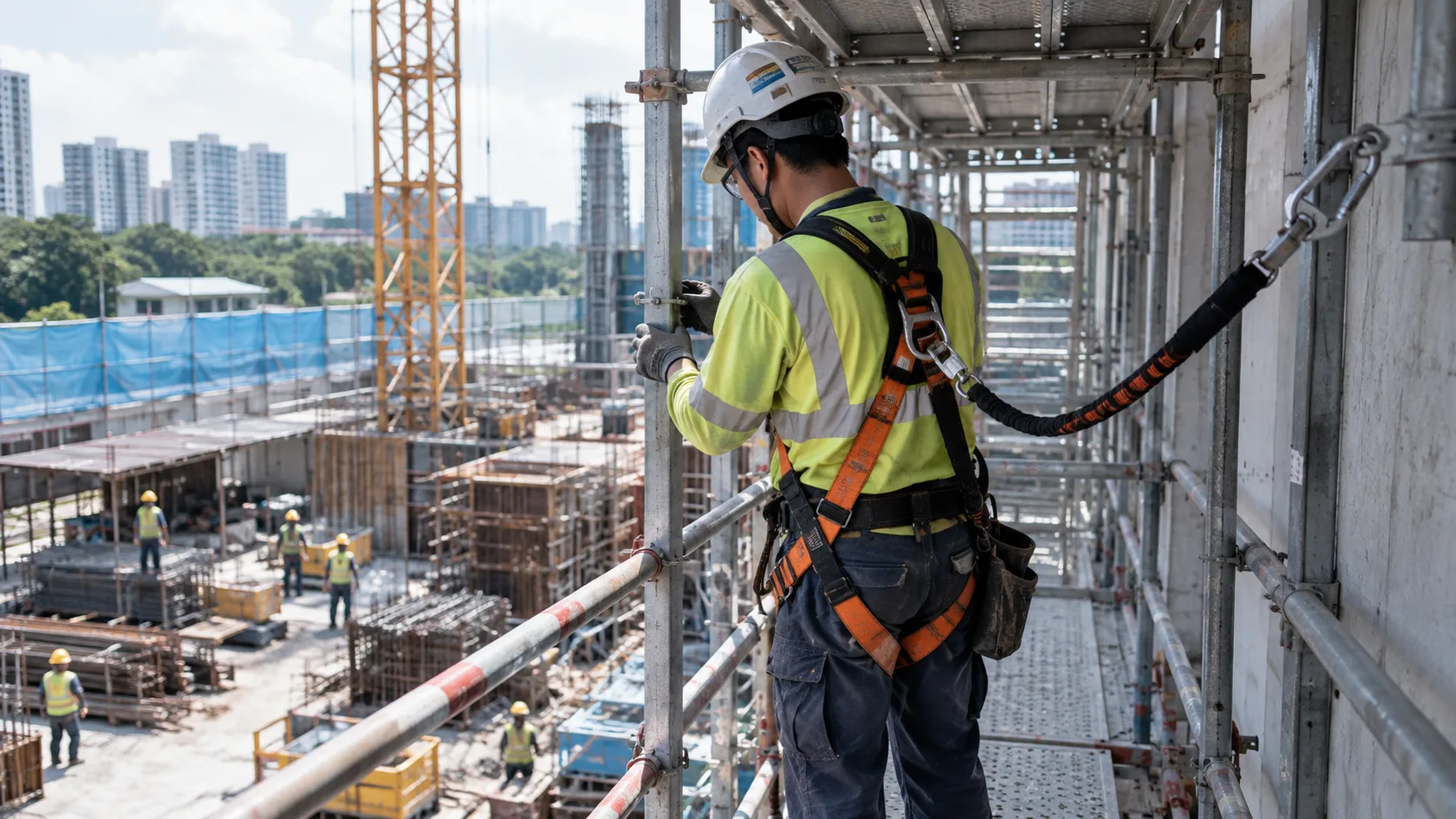
In 2025, falls from height caused 43 of the 148 fatal and major injuries in Singapore's construction sector, more than double the next leading cause. That single number makes it the leading incident type in the industry with the country's worst safety record. The regulation that sets out what employers actually have to do about it, the Workplace Safety and Health (Work at Heights) Regulations, is specific, detailed, and only partly easy to get right.
What actually counts as "work at height" under the law?
Two different definitions, with two different thresholds, and mixing them up is where mistakes start. "Work at height" in general covers any work in an elevated place, near an opening or edge, or on a surface a person could fall through, where it's reasonably likely that a fall would cause injury. There's no fixed metre threshold here: a two-metre fall onto concrete can meet this definition just as much as a five-metre fall.
"Hazardous work at height" is a narrower, specifically defined category: the same kind of work, but where the fall distance exceeds 3 metres. This distinction matters because it's what determines whether the permit-to-work system in Part III of the regulation applies, and Part III itself has a further restriction worth knowing.
Does every worksite need a permit-to-work system?
No, and assuming it does is one of the more common misreadings of this regulation. The permit-to-work system, which requires an occupier to appoint an authorised manager and a work-at-height safety assessor before hazardous work at height begins, applies only to hazardous work at height carried out at a factory. The general duties covering fall prevention, training, guard-rails, fall arrest systems and inspection apply to every workplace, factory or not, but the permit-to-work requirement specifically is narrower than the rest of the regulation.
For a typical construction worksite that isn't a factory, the general duties in Part II are what apply, not the Part III permit system.
Which workplaces are legally required to have a fall prevention plan?
A defined list, and it catches almost every construction site by name. The First Schedule requires a documented, site-specific fall prevention plan, built to the approved code of practice, at:
- Any worksite
- Any shipyard
- Factories processing or manufacturing petroleum, petroleum products, petrochemicals or petrochemical products
- Premises storing 5,000 or more cubic metres of toxic or flammable liquid
- Factories manufacturing fluorine, chlorine, hydrogen fluoride, carbon monoxide, or synthetic polymers
- Factories manufacturing pharmaceutical products or their intermediates
- Factories manufacturing semiconductor wafers
- Any other factory employing 50 or more persons
"Any worksite" is item one on that list, and a worksite is defined broadly enough to cover essentially any premises where building operations or engineering construction work is carried out. If your organisation runs one, a fall prevention plan isn't optional.
What does the law actually require, beyond the plan itself?
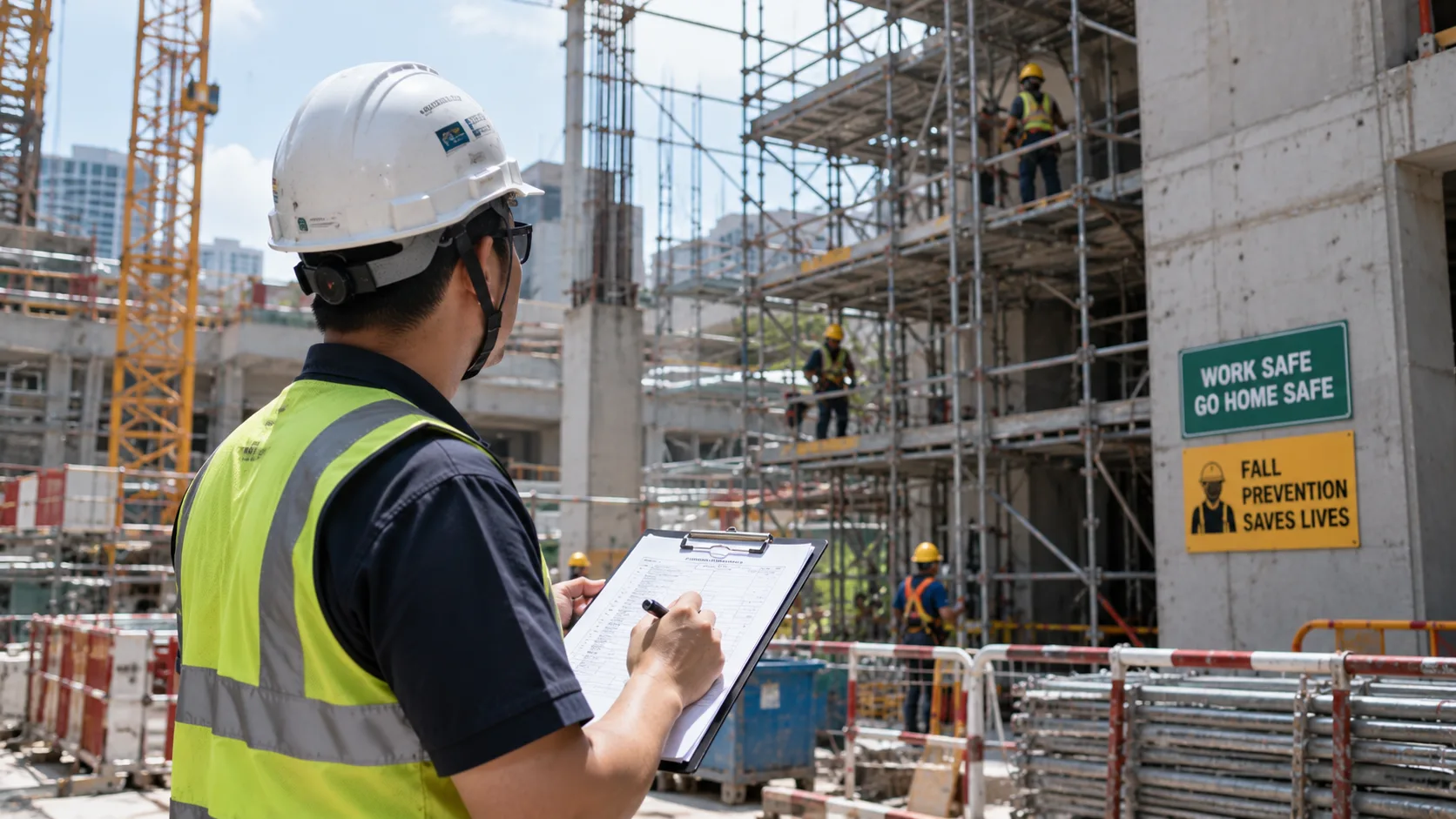
A specific set of physical and procedural duties, most of which sit with whoever directs the work. The responsible person, the employer or the principal directing the work, has to:
- Avoid work at height altogether where it's reasonably practicable to do the work another way
- Ensure the person has received adequate training on the hazards and precautions before working at height
- Ensure the person works under the immediate supervision of a competent person
- Where a travel restraint or fall arrest system is used, ensure it's of sound construction and that everyone using it is trained in it
Separately, the occupier of the workplace has to cover or guard every open side or opening with a fall risk of more than 2 metres, using guard-rails or barriers built to specific standards: the top rail at least one metre above the work platform, with no gap exceeding 600 millimetres between rails. Roof work with a fall risk of more than 2 metres needs the same kind of protection and secured anchorage. Ladders have their own requirements too: sound construction, a stable surface, secured against slipping, and rising at least a metre above the landing point. A fixed vertical ladder rising more than 3 metres needs a safety cage or equivalent protection.
Who has to inspect the safety equipment, and how often?
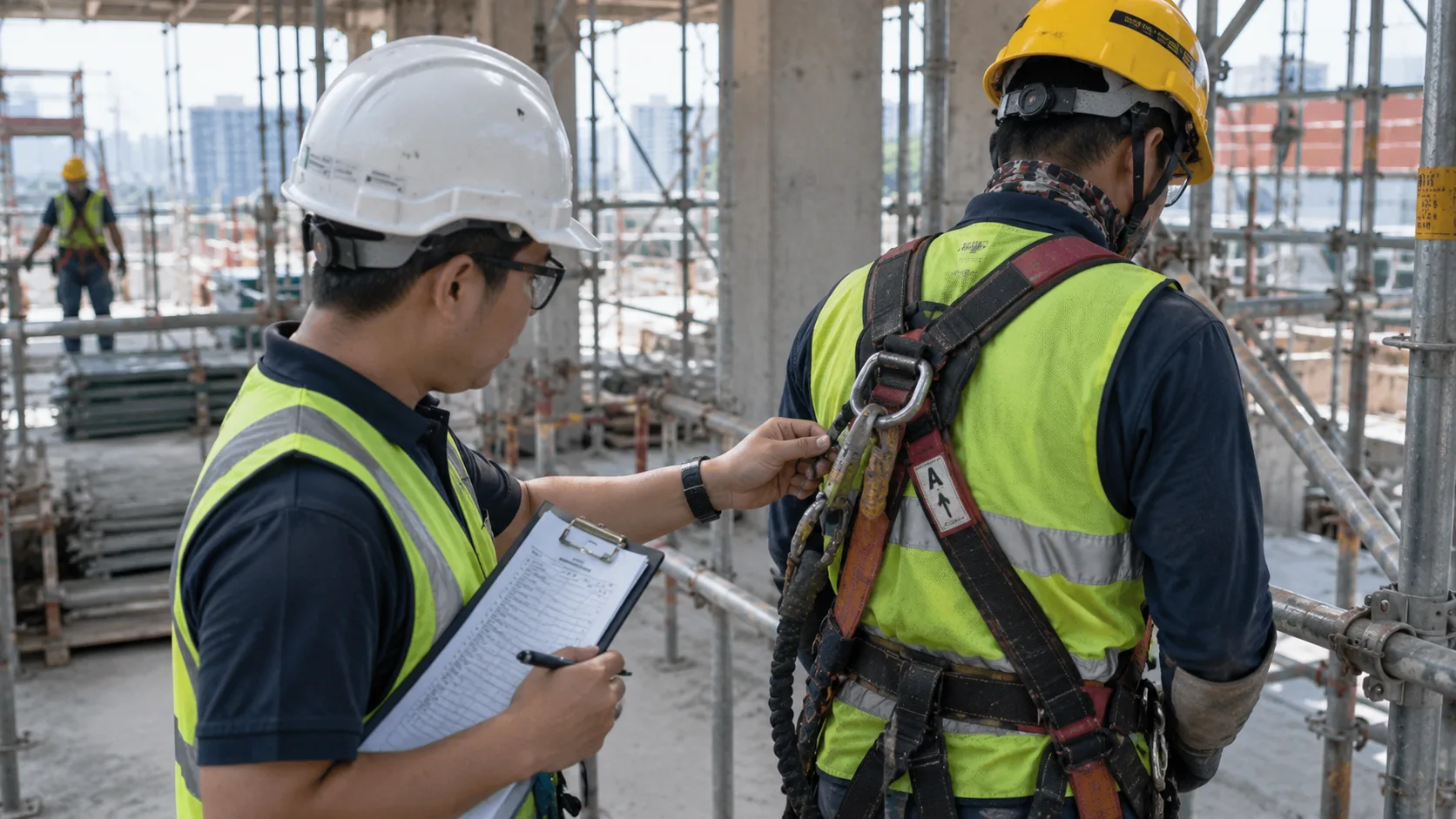
A competent person, at the start of every single work shift, not periodically. Where a travel restraint or fall arrest system is in use, the responsible person has to appoint a competent person to inspect the anchorage and anchorage line before work begins each shift, confirm it's safe for use, and immediately remove anything defective from service. The results go into a register, handed to the responsible person before the shift ends. That register has to be kept for at least 2 years and produced to an inspector on request.
This is a daily obligation, not a one-off equipment check when the system is first installed.
What happens if you don't comply?
Penalties scale differently depending on which duty is breached, not a single flat figure. Contravening the core duties, avoidance, the fall prevention plan itself, training, supervision, guard-rails, fall arrest and travel restraint systems, inspection, staircases, roof work, fragile surfaces and ladders, carries a fine of up to $50,000, up to 2 years' imprisonment, or both. Failing to make the fall prevention plan available for inspection on request carries a fine of up to $10,000. Failing to retain the inspection or design register for the required period carries a fine of up to $2,000. The permit-to-work duties specifically, which only apply to hazardous work at height at a factory, carry a fine of up to $20,000, up to 2 years' imprisonment, or both, rising to $50,000 for a repeat offender.
The duty is specific, even where the risk feels general
Falling from height reads as an obvious hazard, the kind of thing everyone already knows to guard against. The regulation treats it as something more precise than that: a defined threshold for hazardous work, a named list of workplaces that need a documented plan, exact measurements for guard-rails, and a daily inspection duty rather than a one-off equipment check. Knowing the general risk isn't the same as meeting the specific duty.
Reinforcing Work-at-Height Safety in Singapore
If your organisation needs to build fall-prevention awareness on site, alongside or after the physical controls this regulation requires, our workplace safety campaigns and educational talks cover work-at-height topics for construction and site teams, scoped to your specific risks.
Need Help With Workplace Safety?
Talk to our team about a tailored workplace safety, ergonomics, or wellness programme for your organisation.
Frequently Asked Questions
"Work at height" applies with no fixed metre threshold, based on whether a fall would reasonably be likely to cause injury. "Hazardous work at height," which triggers the permit-to-work system, is specifically defined as a fall distance of more than 3 metres. Separately, guard-rails and roof-work protection are required wherever the fall risk exceeds 2 metres.
Only if the site is a factory. The permit-to-work system in Part III applies only to hazardous work at height carried out at a factory. The general duties, fall prevention plan, training, guardrails, and inspection apply to every workplace regardless of whether it's a factory.
If your organisation operates any worksite, defined broadly as premises where building operations or engineering construction work is carried out, yes. Worksites are the first category listed in the regulation's First Schedule, alongside shipyards and several categories of factory.
At the start of every work shift, by an appointed competent person, not on a periodic schedule. Defective equipment must be removed from service immediately, and inspection results kept in a register for at least 2 years.
Up to $50,000, up to 2 years' imprisonment, or both. Separately, failing to make an existing plan available for inspection carries a fine of up to $10,000.
Not economy-wide: vehicular incidents caused more workplace fatalities than falls from height in 2025. But within construction specifically, falls from height is the single leading cause of combined fatal and major injuries by a wide margin, and construction is Singapore's highest-risk sector.
The responsible person, either the employer or the principal directing the work, has to ensure the worker has received adequate safety training before working at height and works under the immediate supervision of a competent person for that specific work.