

Quick Summary
An ergonomic risk assessment is a check on how work is done. You look at each task, spot what could hurt someone's back, neck, shoulders, or wrists, and decide what to change.
In Singapore, you do not need a special licence or a separate form for it. It is part of the risk assessment every employer must already do. This guide shows you how to run one, who should do the scoring, and when you can do it yourself.
In short:
- Ergonomic hazards are already part of the risk assessment the law asks for.
- Look at the task first, then the person and the furniture.
- Fix the task before you reach for supports or training.
- Keep the records for at least 3 years, and review at least every 3 years.
Do you have to do an ergonomic risk assessment?
Yes, as part of your normal risk assessment. The Workplace Safety and Health (Risk Management) Regulations say a hazard includes any "ergonomic hazard". They also say the employer must carry out a risk assessment of the safety and health risks to anyone affected by the work (Singapore Statutes Online, current version as at 5 October 2026).
The same Regulations set four other rules that matter here:
- Keep records. Write down the assessment and what you did about it. Keep it "for a period of not less than 3 years".
- Review it. Review the assessment "at least once every 3 years".
- Review it sooner when things change. Do it again if someone is injured by a hazard at work, or if there is "a significant change in work practices or procedures".
- Tell your people. Take reasonable steps to tell anyone exposed what the risk is and what you are doing about it.
This is a short summary, not legal advice. Penalties are left out on purpose. Your compliance owner should read the Regulations in full.

What changed in December 2025?
Back and leg injuries from work now count as a reportable occupational disease. Before 1 December 2025, the reportable condition covered only the upper limb (arms, hands and shoulders). MOM and MOH widened it to "Work-related musculoskeletal disorder". That now includes problems "involving the back, spine and lower limbs". A doctor must confirm the condition is work-related.
Doctors must report within 10 days of diagnosis. Employers must also report to MOM within 10 days of being told about the diagnosis (MOM and MOH circular, 28 November 2025).
MOM's 2025 national report shows these cases "increased by 27% from 249 cases in 2024 to 317 in 2025". Health & Social Services had the most (100 cases, 32%), then Manufacturing (43 cases) and Transportation & Storage (29 cases) (MOM Workplace Safety and Health Report 2025).
Be careful with that 27%. It counts cases reported to MOM. It does not prove that work became 27% riskier.
What are you looking for?
You are looking for things about the work that strain the body. MOM lists the main ones when doctors decide if a condition is work-related (MOM FAQs on occupational diseases). The WSH Council's ergonomics guideline covers the same ground, except contact stress (WSH Council, Improving Ergonomics in the Workplace, 2014).
Use this list, which is the wider of the two:
| What to look for | What it looks like at work |
|---|---|
| Awkward posture | Reaching above the shoulder, bending low, twisting |
| Staying in one posture | Standing or sitting for hours without a break |
| Repeating the same movement | Packing, scanning, typing, using a mouse |
| Heavy or sudden effort | Lifting cartons, pushing trolleys, a sudden heavy load |
| Vibration | Hand tools, driving heavy vehicles |
| Contact stress | Resting a forearm on a hard desk edge |
Offices count too. The WSH Council's guideline has a checklist for office work as well as for lifting and carrying.
How do you run one, step by step?
Pick the riskiest tasks, watch them being done, then score them and fix what scores high. These five steps follow the routine in the WSH Council's guideline (section 6.4).
- Choose where to start. Start with tasks that have caused injuries or complaints in the past, or tasks that show several strain factors from the table above.
- Do it with the people who do the job. They know the shortcuts and the awkward parts that a manual will not show.
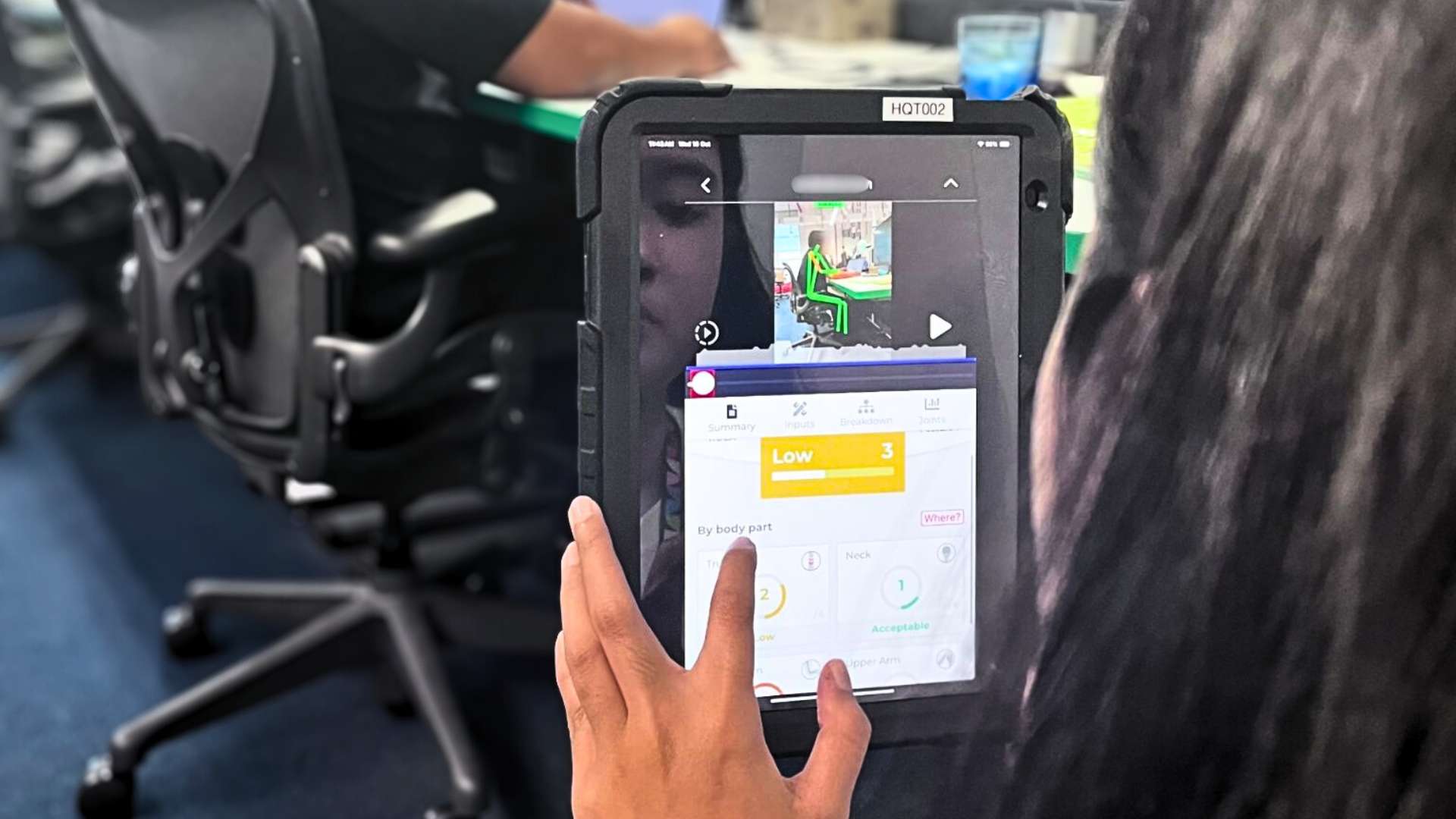
- Watch the task as it is really done. Break the job into small steps. For each step, note the posture, the movement, the load, and the work area.
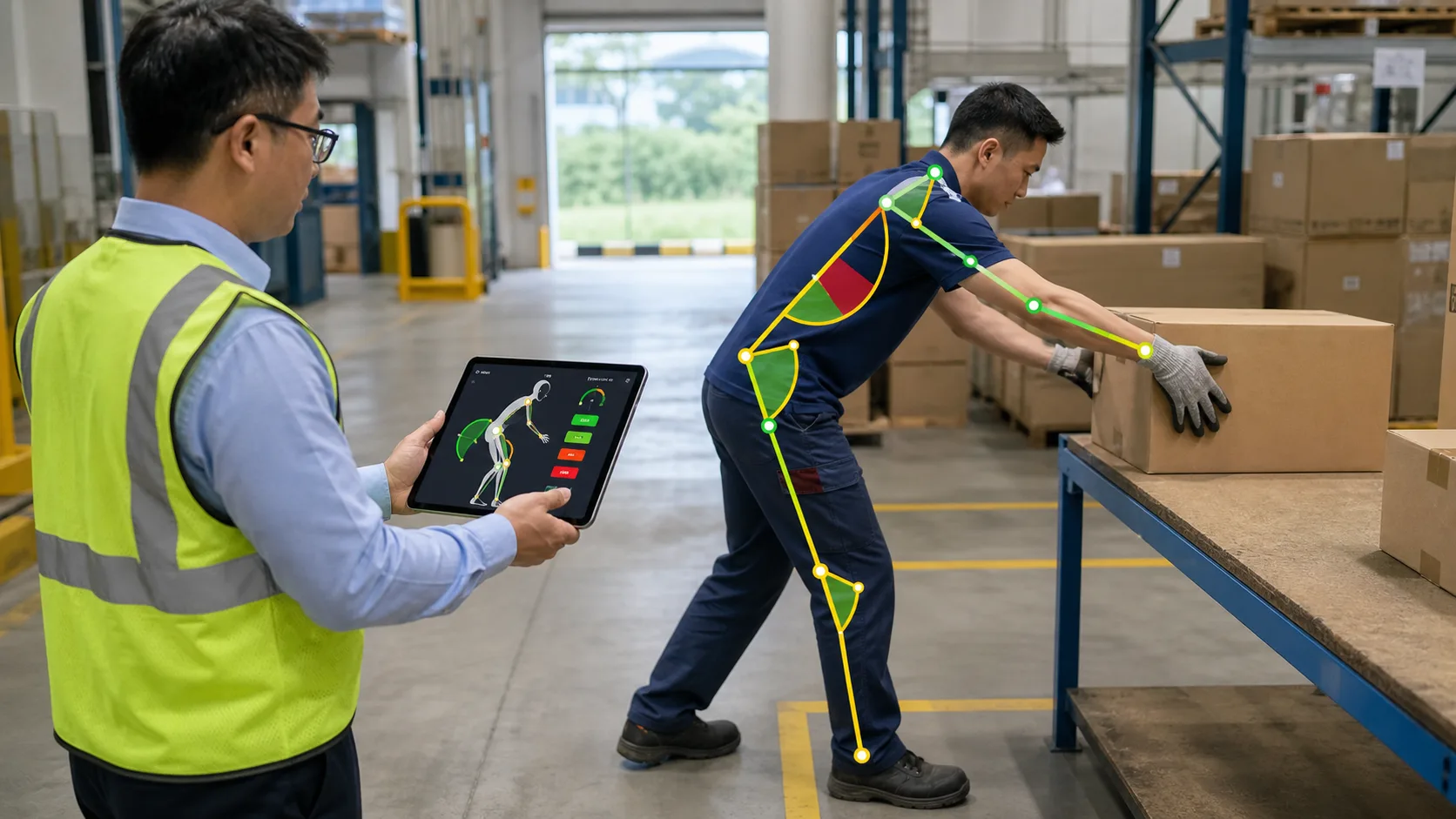
- Score the high-risk tasks. Someone trained in ergonomics should do this part. The guideline says the detailed analysis is "usually conducted by personnel trained in ergonomic assessments".
- Act on the high scores, then write it all down. The guideline says high or extreme ratings, especially when several show up in one task, "indicate a need for control measures". Record what you found and what you changed. Set a review date.
Who should do the assessment?
A small team that knows the work should lead it, and a trained person should do the scoring. The WSH Council's Code of Practice on risk management says the assessment should be done by "a multi-disciplinary team who has thorough knowledge of the work to be assessed" (WSH Council Code of Practice, second revision 2015). In plain terms: bring in people from different roles who know the job, such as a supervisor, a safety officer and a worker.
If you bring in an outside provider, here is how AnjouHealth's Workplace Ergonomics Risk Assessment (WERA) works, according to our WERA service page. An assessor visits your site for "half a day to a full day". They score tasks using two standard tools, REBA and RULA. You get a report, "usually delivered within 5, 7 working days", with a priority action plan.
WERA is for physical tasks. It is not the right tool for one person whose neck hurts at a desk. That is a workstation question, covered in WERA or a Workstation Ergonomics Assessment: Which One Do You Actually Need? WERA also finds risk before an injury. It does not treat an injury.
Can you do it yourself?
For a first look at low-risk work, yes. The free checklist is a good start. Go through each task, mark the "Yes" answers, and see where the problems cluster.
Call in a trained assessor when:
- One task has several "Yes" answers
- Someone has been injured, or a doctor has diagnosed a work-related muscle or joint problem
- The job involves a lot of heavy handling and you need a proper score, not just an opinion
- A job, tool or layout is about to change
A checklist shows you where to look. It cannot tell you how serious a risk is.
What do you do with the results?
Change the task first. Use supports and protective gear only as a stopgap. The WSH Council's guideline says "Elimination and substitution are the most effective ways to control ergonomic risks." It also says "PPE may be used as an interim control, but not as a permanent control when other controls are feasible."
For example, raise the shelf before you hand out back braces. Add a lifting aid before you run another lifting talk. Then record what you changed, tell the people affected, and set the next review date.
Where to start this month
Pick one task, not the whole site. Choose the task with the most complaints or the most lifting. Walk through it with the people who do it, and run the checklist. Then decide if it needs a scored assessment. Once it is written down and dated, you have a record. If the task involves lifting, our step-by-step method for assessing a lifting task shows how to score it.
Next Steps: Talk to Us About a Workplace Ergonomics Risk Assessment
If you have tasks that need scoring, our Workplace Ergonomics Risk Assessment covers physical roles on site. Tell us which tasks worry you. We will say honestly whether a WERA, a workstation assessment or a checklist is the right fit.
Need Help With Workplace Safety?
Talk to our team about a tailored workplace safety, ergonomics, or wellness programme for your organisation.
Frequently Asked Questions
Ergonomic hazards are part of the risk assessment the Regulations require. There is no separate ergonomic form. Your compliance owner should read the Regulations in full.
At least every 3 years. Do it sooner if someone is injured by a hazard at work, or if work practices change significantly.
At least 3 years.
A team that knows the work, with a trained person doing the detailed scoring.
Yes, from 1 December 2025, if a doctor confirms the condition is work-related. The list now includes the back, spine and lower limbs.